Relics Explained: Your Questions About The Relic Project and the Saints

A Note from the Founder
The recent attention surrounding the relics of Blessed Fulton J. Sheen has introduced many people to the Church’s tradition of venerating relics. I’m grateful to see this conversation growing, and I hope the questions below help you understand both the tradition and the mission behind The Relic Project.
I want to be candid: even for those of us who work with relics, there is a great deal to learn. When I began this work, much of the practical information I needed was scattered, difficult to find, or simply unavailable in one place. That experience inspired me to bring reliable guidance together and create resources that make this tradition more accessible. There are also many fuzzy or grey areas regarding relics that still need answers. For example, do relics actually classify as sacramentals or are they just a tradition of popular piety. Do you need to touch the bone itself to receive the blessing of the saint?
One of those resources is an in-depth PDF on the veneration of relics, reviewed by our clerical advisors, including priests with extensive experience in this field. If you would like a copy, please email contact@therelicproject.org. My hope is that these resources help you honor the saints reverently and, through their witness, draw closer to Jesus Christ.
Anthony Di Mauro
Founder and Executive Director, The Relic Project
Relics often spark two questions:
What am I looking at? and Why does the Church care? Here are brief answers, beginning with our mission and then turning to the Catholic faith behind relic veneration. Every answer is 500 characters or fewer, so you can also share individual answers with someone who is curious.
About The Relic Project
What is The Relic Project?
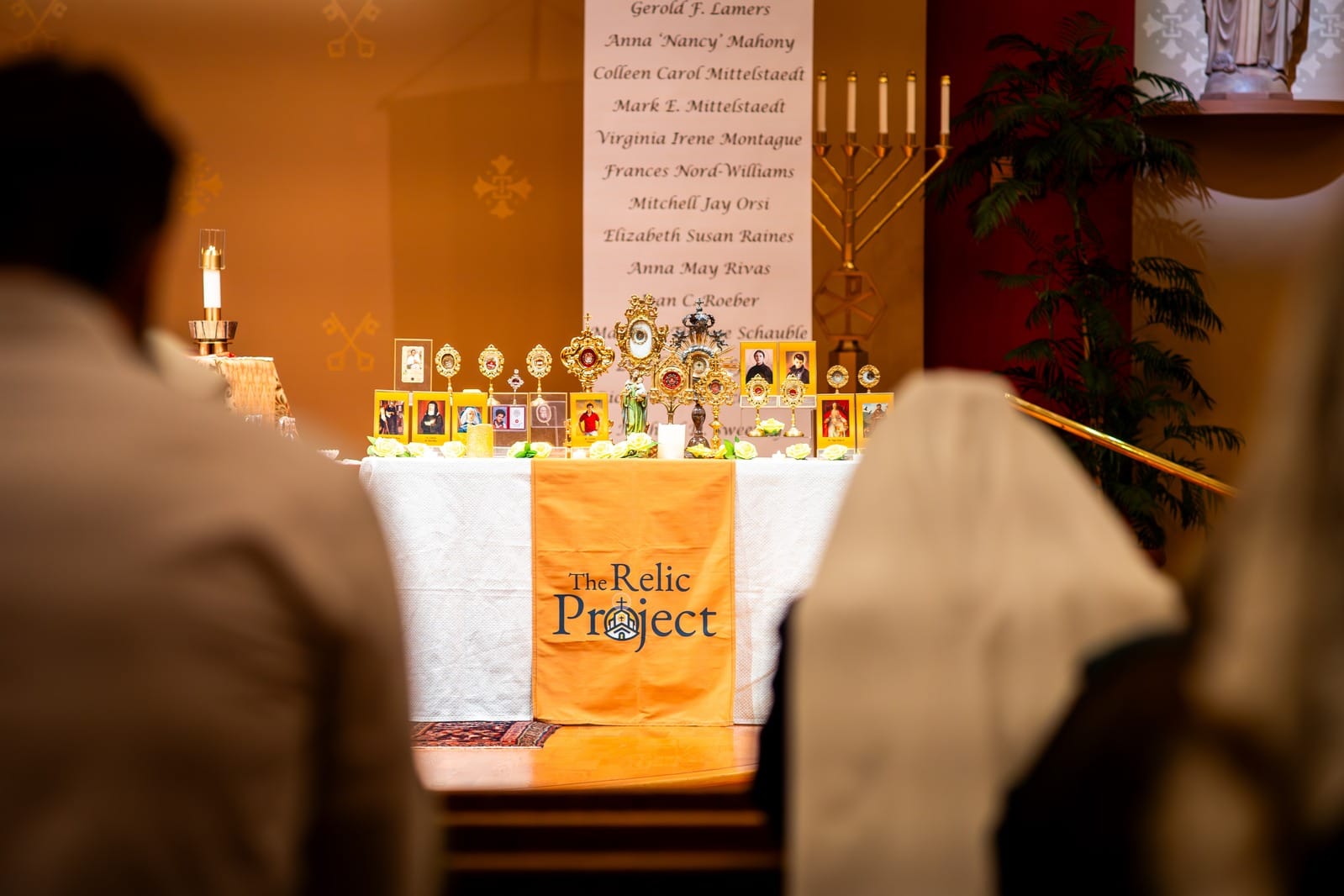
The Relic Project is a Catholic nonprofit based in Spokane, Washington. We help people encounter Jesus Christ through the witness of the saints. Our work includes the world's first public Map of Relics, educational resources, and prayerful visits to communities with relics. We want these encounters to inspire people to follow Christ more closely. Our end goal is to become a Vatican trusted all-in-one resource for relics worldwide.
Why was The Relic Project founded?
Many Catholics have never seen a relic or learned why the Church honors one. Our founder, Anthony Di Mauro, began The Relic Project in 2024 to make this tradition understandable and accessible. We document places where relics can be visited, teach their meaning, and help bring the saints' witness into everyday life.
What is the Map of Relics?
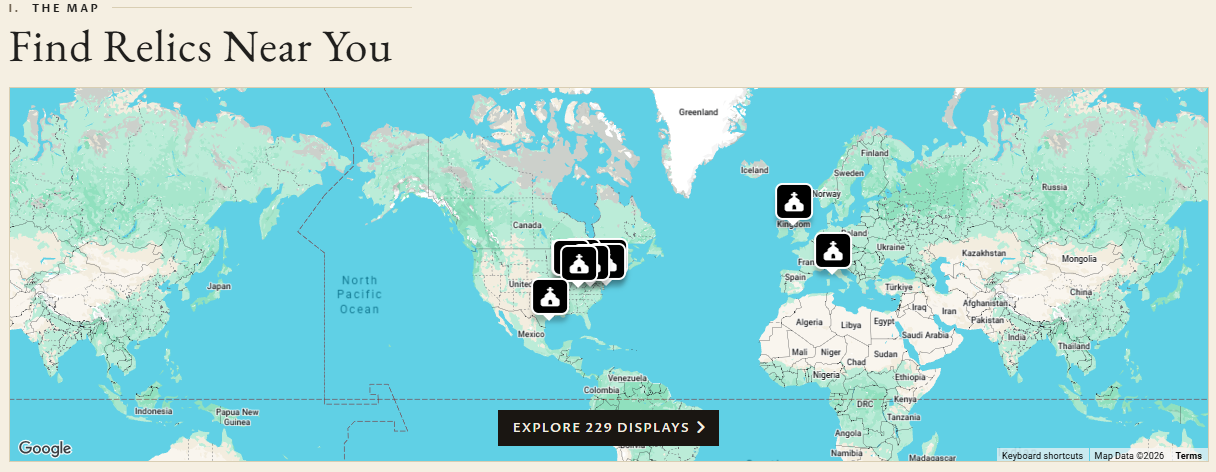
Our Map of Relics is a growing guide to relics in public displays at churches, shrines, and other suitable sacred places. Search by location or saint to plan a visit and learn more. It is a work in progress, so a missing listing does not mean a relic is absent. Always confirm a site's hours and access before traveling.
How can I help add a relic to the map?
Send us the church or shrine name, location, saint's name, and any reliable information about the display. Photos and a contact person are helpful when available. Our team reviews submissions before publishing them. Please do not send a private home's address: the map is intended to help people find relics they can visit appropriately.
Where are you based?
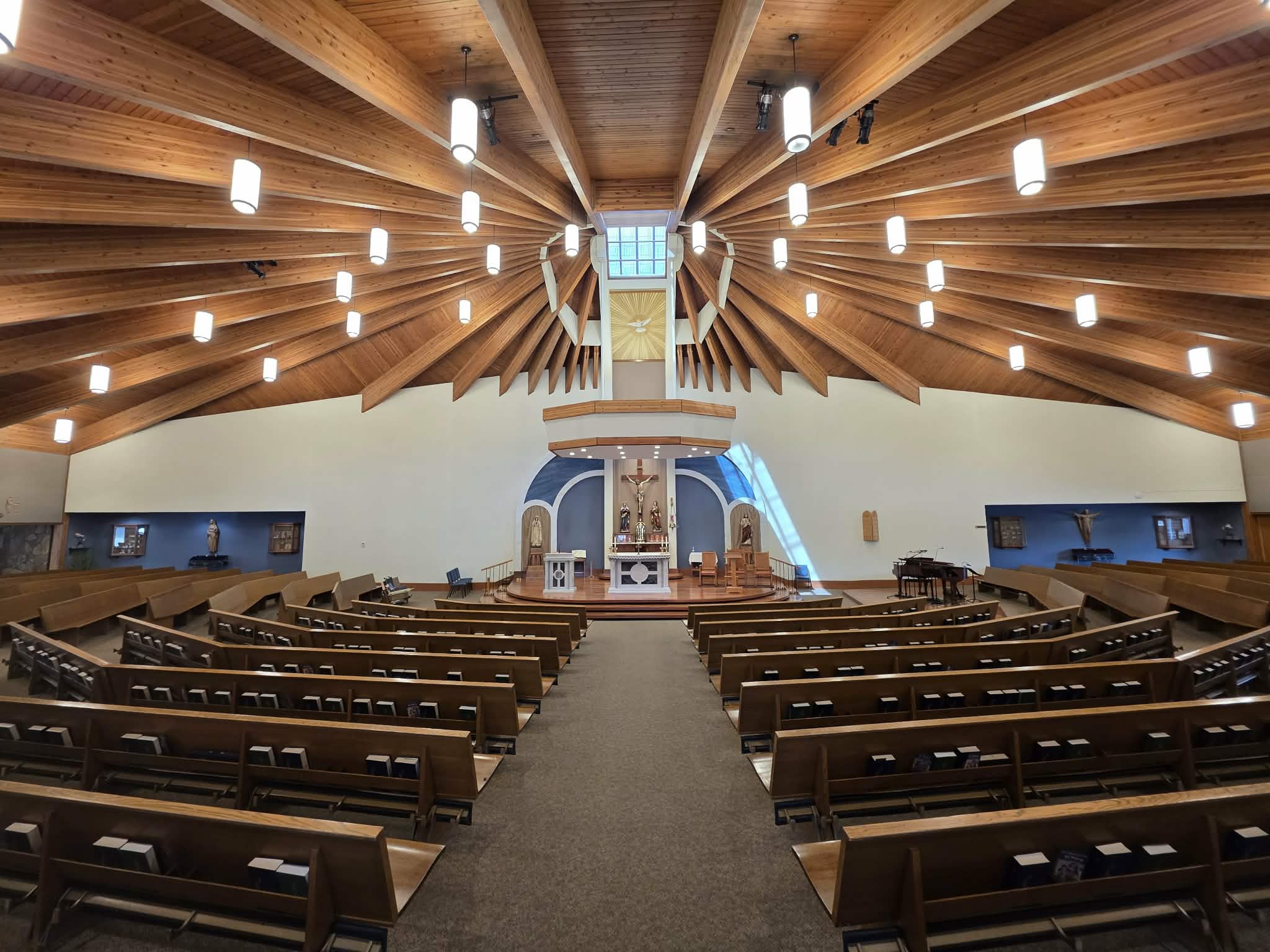
Our headquarters is at St. Mary Catholic Church in Spokane Valley, Washington USA.
Do you put privately owned relics on the map?
Our map focuses on relics that are publicly accessible in churches, shrines, and similar sacred places. We do not publish someone's private address merely because a relic is kept there. If you care for a relic at home and would like it to serve the wider Church, contact us to discuss responsible options for its care and possible public veneration.
Where can I visit relics in Spokane?
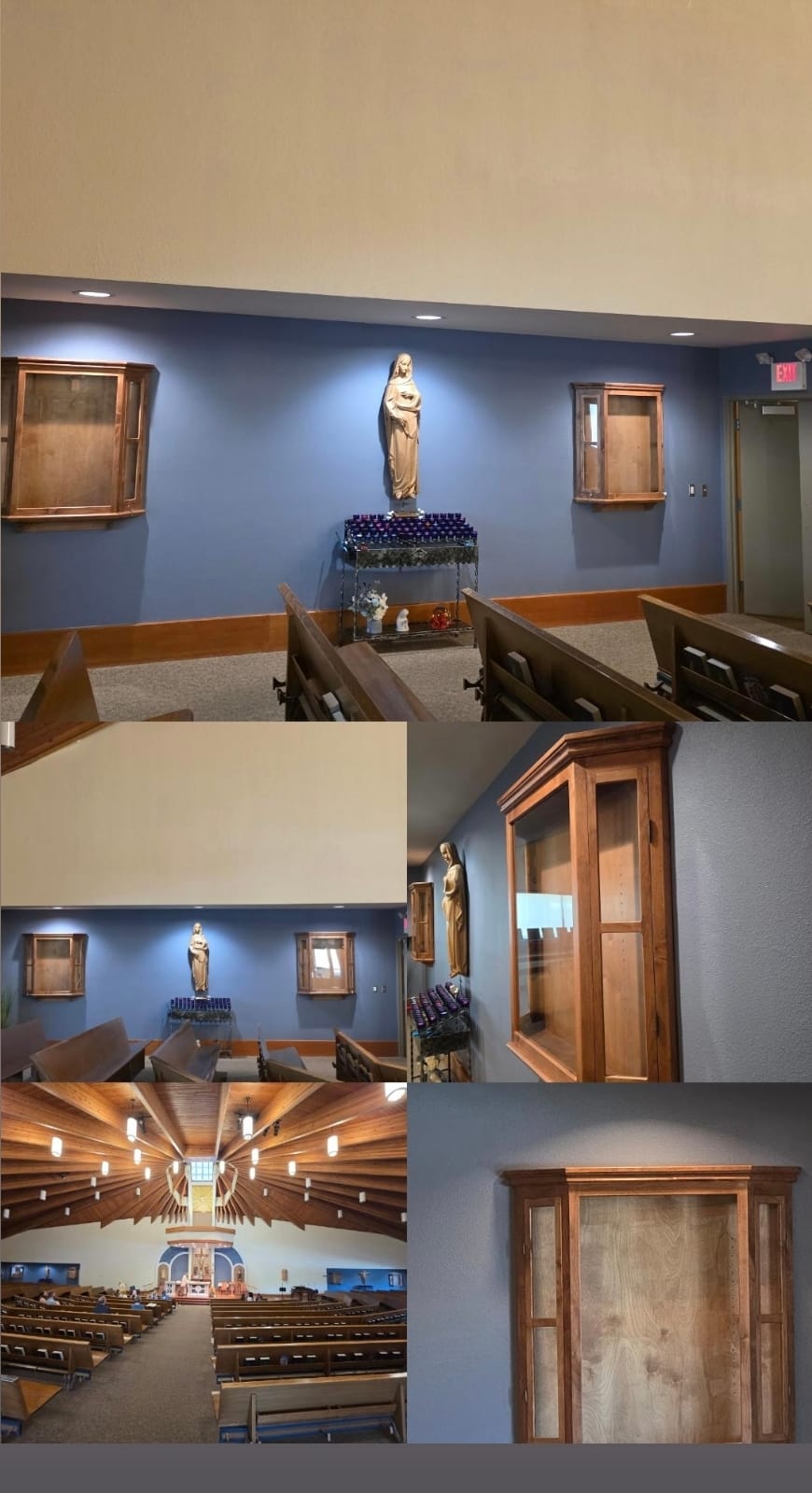
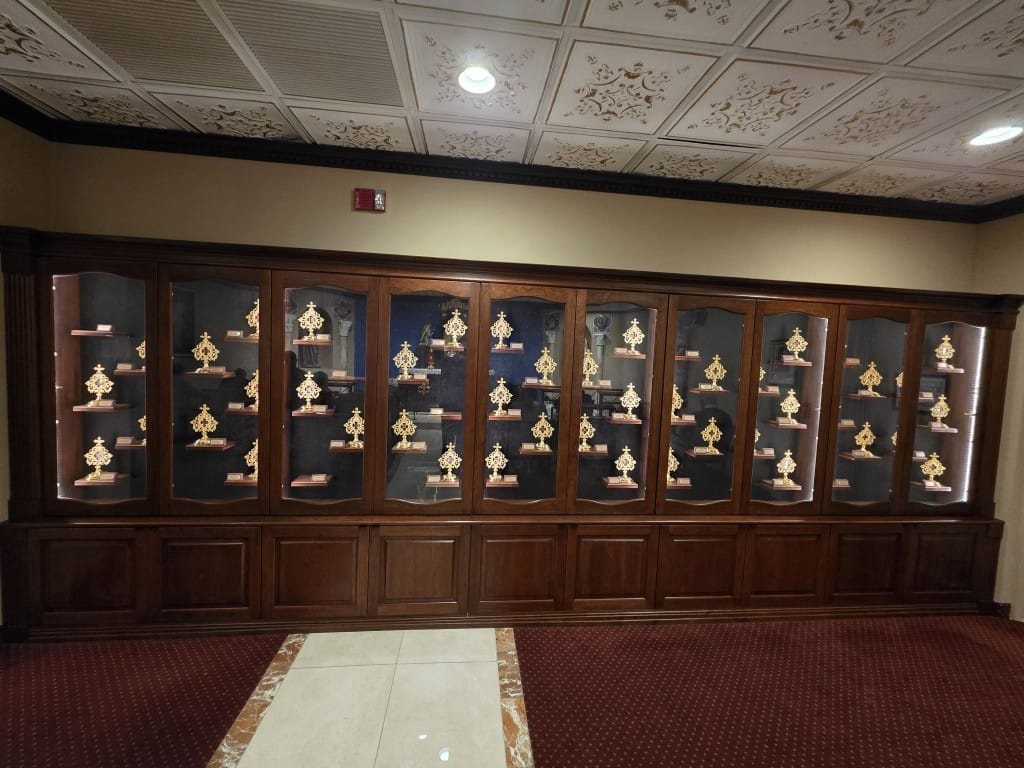
A permanent public reliquarium is located at St. Mary Catholic Church in Spokane Valley, Washington. Our map also identifies other public displays. Check the parish's current access and hours before visiting, especially if you are traveling. A reliquarium is a place where relics are reverently kept and displayed; it is an invitation to prayer, not a museum exhibit alone.
What kinds of visits does The Relic Project offer?
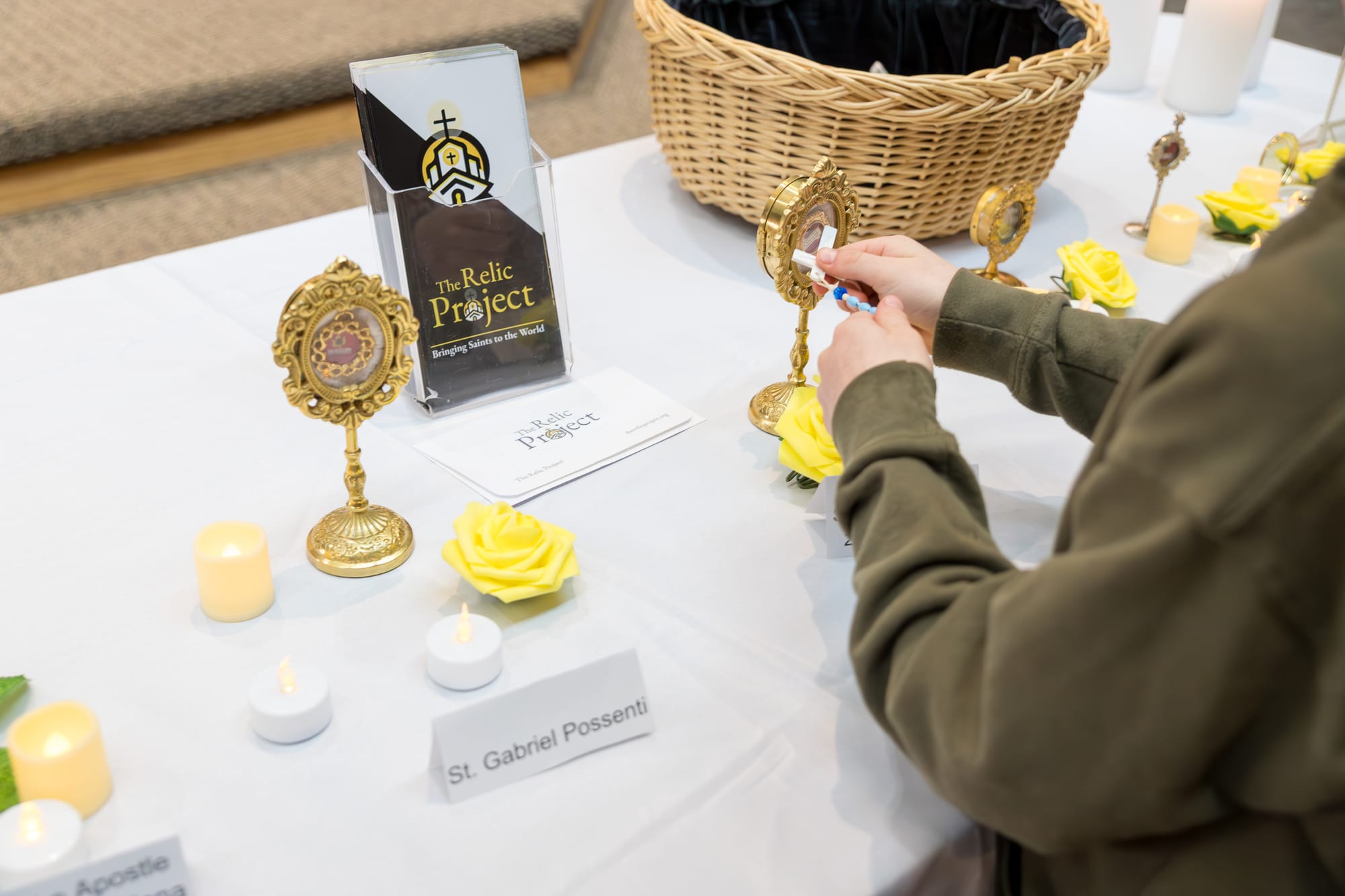
We bring relics to parishes, schools, homes, hospitals, conferences, and retreats when scheduling and circumstances allow. Each visit is planned around the people present and includes an explanation of relics and time for prayer. Our goal is to help guests meet the saints as witnesses who lead them to Jesus, while caring for the relics entrusted to us.

What happens during a relic visit?
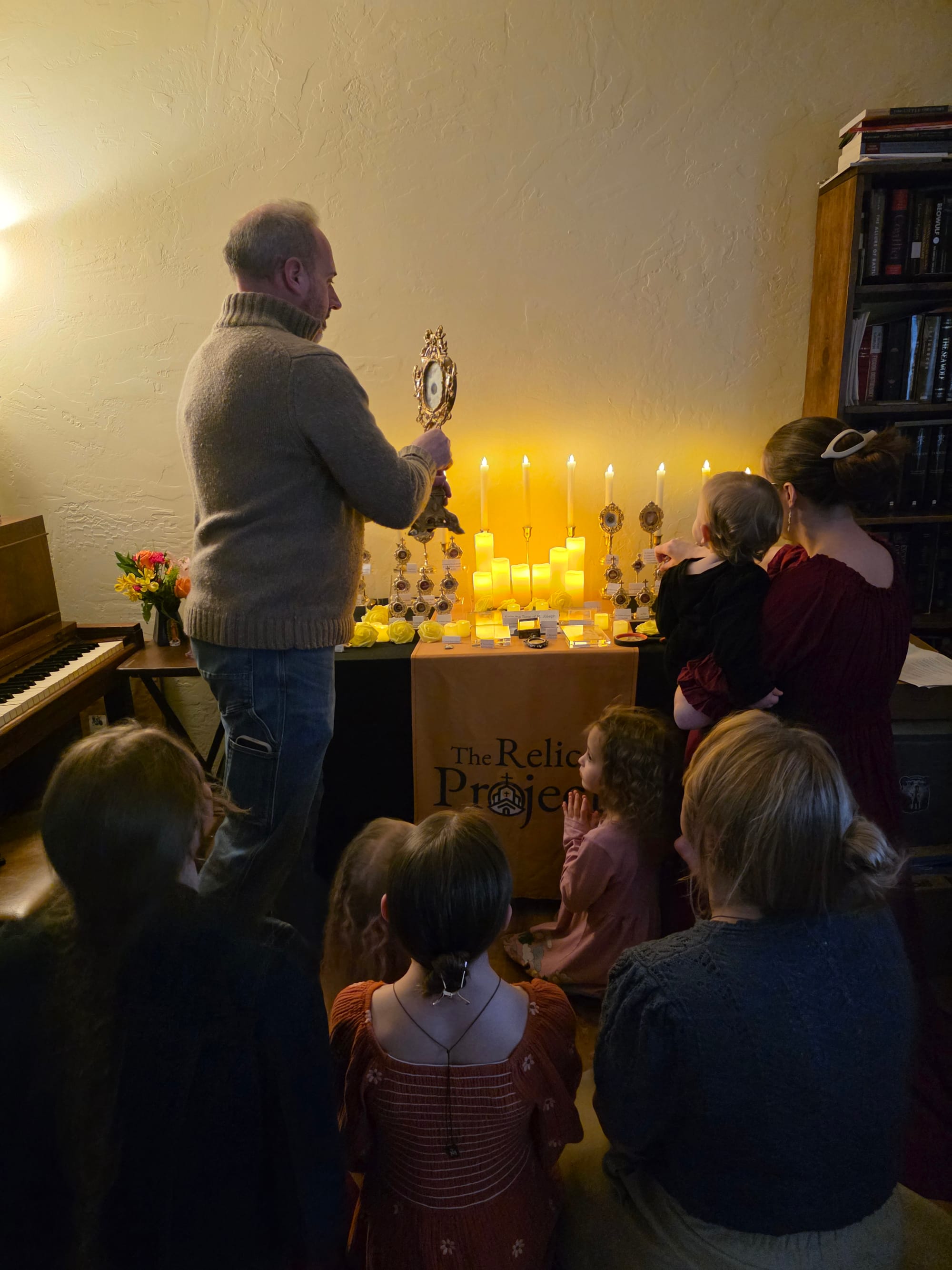
We set up a reverent display, introduce the Church's teaching on relics, and share stories of the saints. Guests then have time to pray and venerate the relics at a comfortable pace. The format can be adapted for a classroom, parish evening, retreat, hospital visit, or home gathering. We coordinate the practical details with the host in advance.
How do I request a visit?
Email contact@therelicproject.org and tell us where you are, the kind of visit you hope to host, and your preferred dates. We will ask you to complete an initial relic visit interest form. Depending on the setting, we may then send a more detailed form so we can plan the relics, teaching, travel, and care needed for your event.
Can you bring relics to my home?
Yes. A home visit can bring family and friends together for fellowship, a brief explanation of the communion of saints, and unhurried prayer with the relics. We work with the host on the space, guest count, and schedule. You do not need to be an expert or prepare a formal program; we will guide the gathering with reverence and simplicity.
Can I ask for a particular saint's relic?
Our organization does not give relics out to lay people due to the many abuses we have witnessed. We only give relics if the relic will be placed on permanent public display inside a church.
Is there a cost to host a visit?
For many organized visits, we normally request a $2,000 donation, with flexibility according to the community and the visit. Travel is not included in the minimum donation. Travel needs are discussed in advance; home visits are planned individually and require a minimum donation of between $500 - $2000. Contributions support our ministry's work of advancing the relic renaissance.
Do you offer free teaching resources?
Yes. Email contact@therelicproject.org to request a free PDF of our relic veneration prayer card or access to an introductory presentation on the theology of relics. These resources can help families, teachers, and parish leaders explain what Catholics believe and approach a visit with confidence and reverence.
How can I volunteer or become a relic hunter?
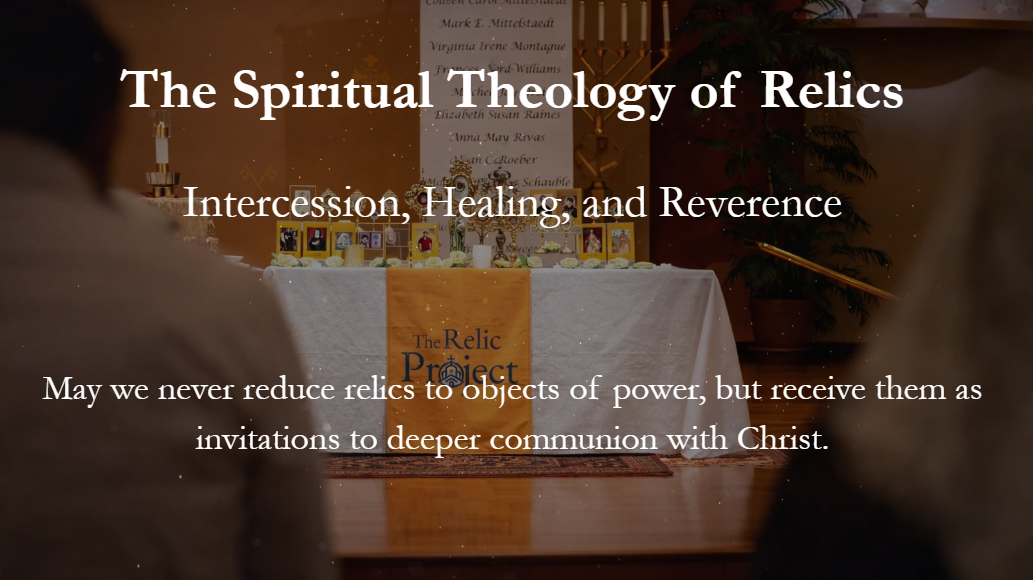
Visit the Get Involved section at TheRelicProject.org to apply. Relic hunters help locate and document public displays for the map; other volunteers assist with events, research, education, and outreach. You do not need to own a relic to help. Tell us your skills, location, and availability so we can find a useful way for you to serve.
Can I entrust a relic to The Relic Project?
We welcome conversations with people seeking reverent care and public access for a relic. Email contact@therelicproject.org with photographs and any certificate or history you have. We review each situation carefully and discuss appropriate arrangements. Please contact us before sending anything through the mail; do not remove a relic from its sealed case. Any relic that is entrusted to our ministry, after the authenticity is verified, will be placed on public display at St. Mary Catholic Church in Spokane Valley, WA and will be brought out during our relic tours.
How can I support the mission?
Pray for us, share the Map of Relics, volunteer, host a visit, or donate at TheRelicProject.org. Monthly gifts, even small ones, help us plan ongoing education, safe transport, and free prayer resources. We do not rely on the sale of relics. Your support helps more people discover the saints and, through their witness, draw closer to Christ.
Understanding and Venerating Relics
What is a relic?
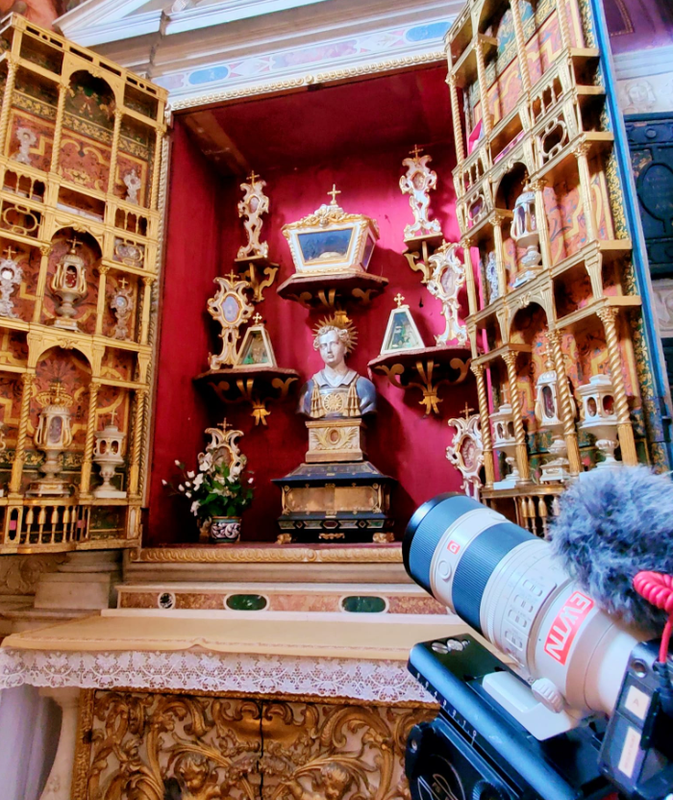
A relic is a physical reminder of a holy person's life: usually part of a saint's remains, something the saint used or wore, or an object touched to a relic. The word comes from a term meaning 'remains.' Catholics honor authentic relics because the saints' bodies and lives were instruments of God's grace and are destined for the resurrection.
Why do Catholics venerate relics?
We honor relics because we honor the saints who belonged to Christ. Their lives show what God's grace can do in ordinary human beings, and their remains remind us that the body matters. Veneration is a gesture of respect and prayer within the communion of saints. It should deepen our love for Jesus and our desire to imitate the saints, not distract from Him.
Is venerating a relic the same as worshiping it?
No. Worship belongs to God alone. Catholics give the saints honor and ask for their prayers, while every grace comes from God. A kiss, bow, or moment of prayer before a relic is a sign of respect for a person made holy by Christ. If our attention stops at the object instead of leading us toward God, we have missed the point of the devotion.
Is relic veneration biblical?
Scripture describes God acting through physical things associated with holy people. A man revives after touching Elisha's bones (2 Kings 13:21), and cloths that touched St. Paul are brought to the sick (Acts 19:11–12). These passages are not instructions to treat objects as magic; they show that God's power is not limited by material things.
Is this a new Catholic practice?
No. Christians have honored the bodies and burial places of martyrs since the early Church. The Church still recognizes the veneration of authentic relics as part of Catholic devotion. It also insists on careful authentication, proper care, and catechesis so that the practice remains centered on Christ rather than superstition or collecting.
What is a first-class relic?
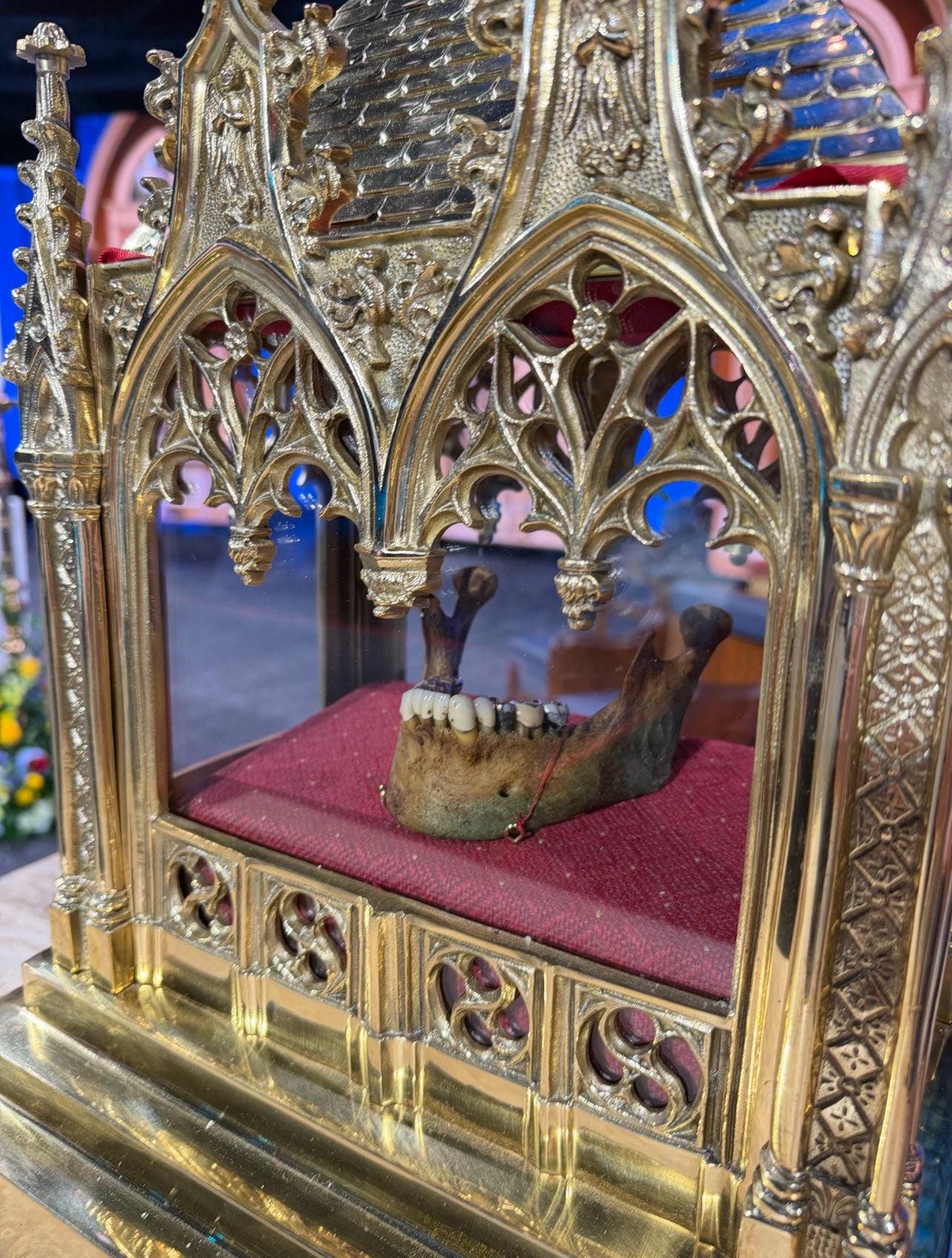
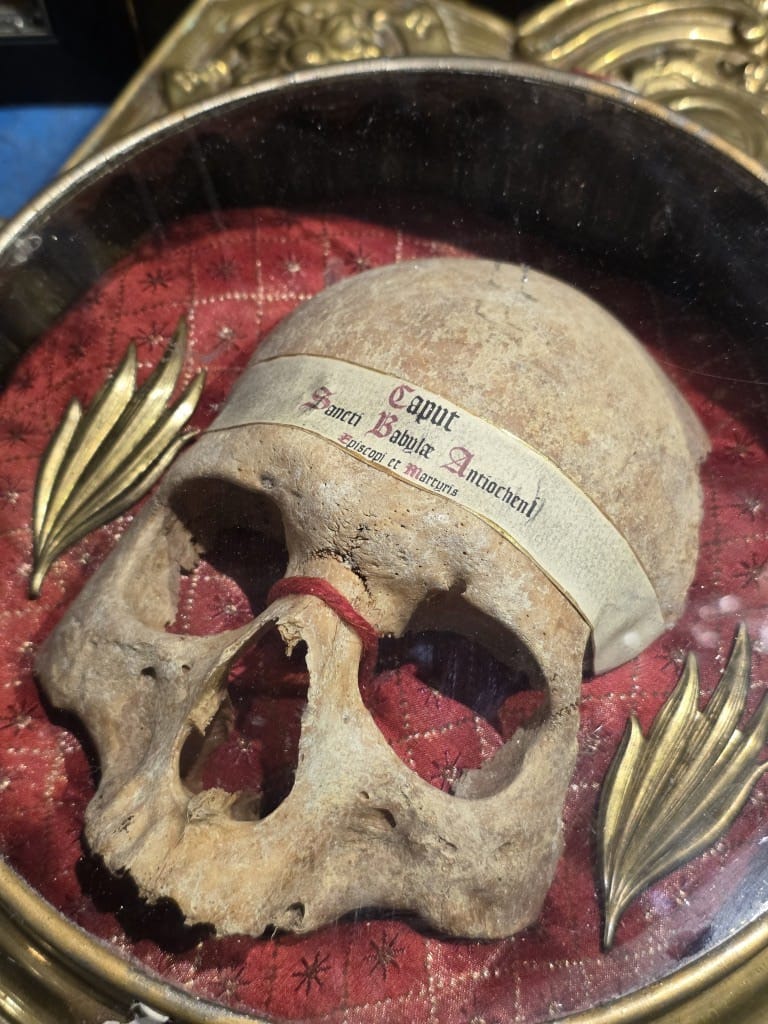
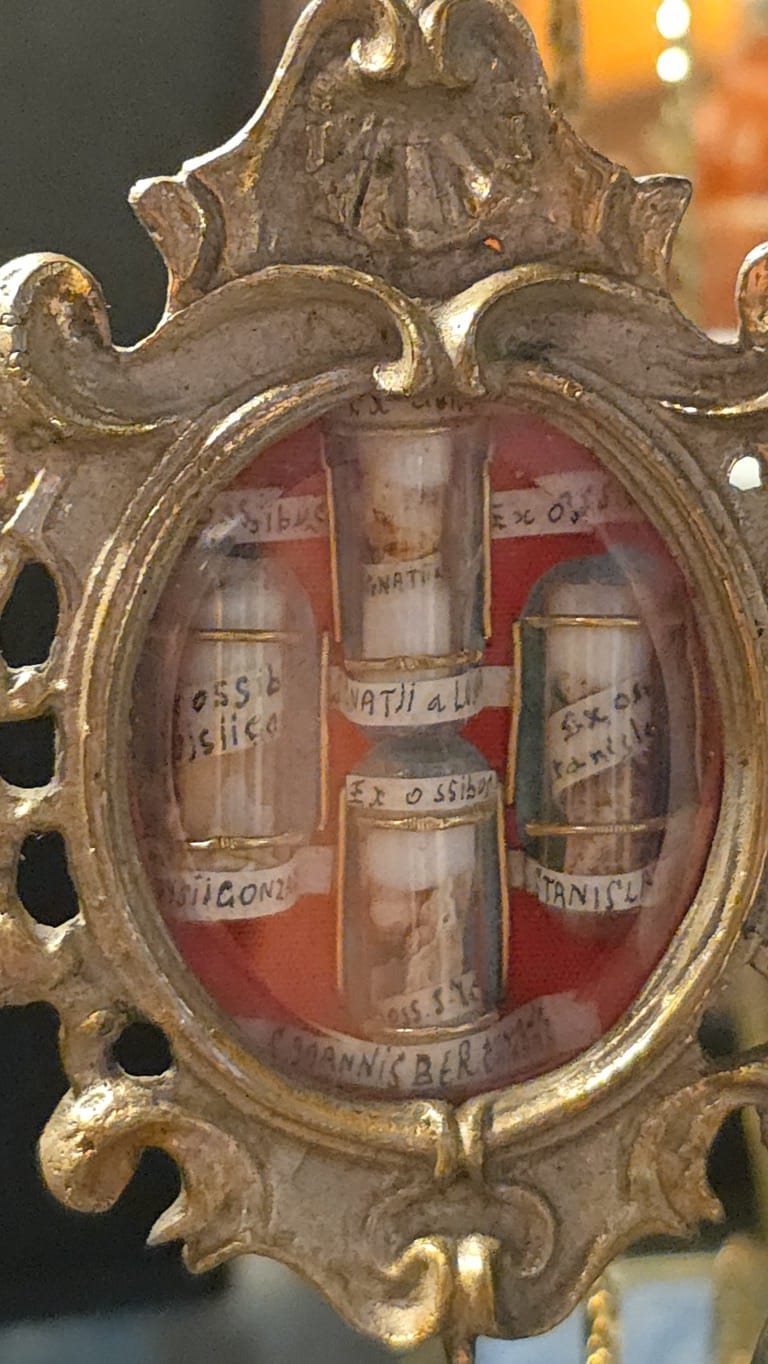
A first-class relic is part of a saint's body, such as a small fragment of bone or a strand of hair. Because it is part of a human person, it must be treated with particular dignity. The Church has procedures for recognizing, preparing, documenting, and preserving such relics. They should never be casually opened, divided, bought, or sold.
What is a second-class relic?
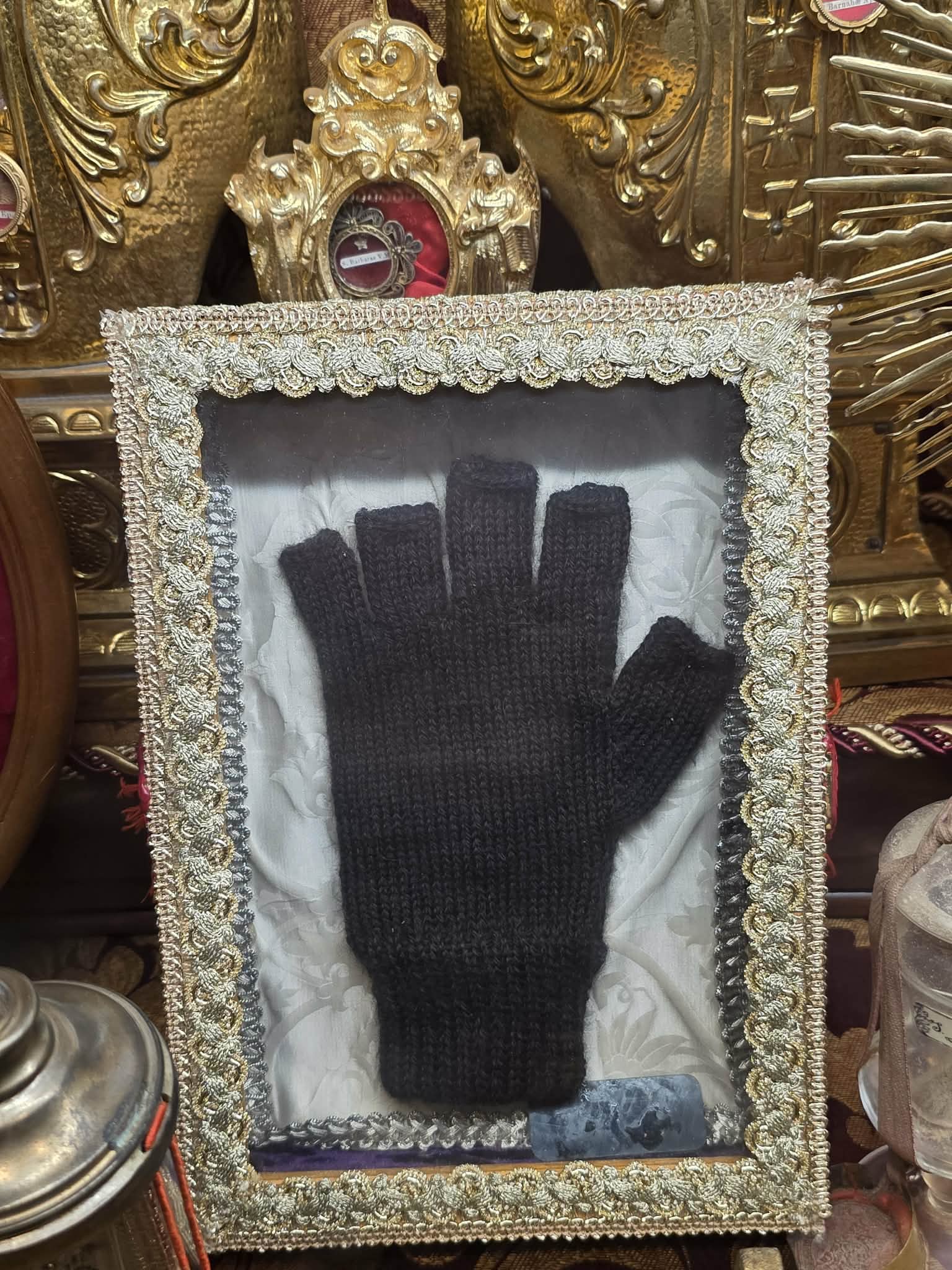
A second-class relic is an item a saint used or wore, such as clothing, a manuscript, or another personal possession. It is honored for its direct connection to the saint's earthly life. The particular item's history still matters: a label alone is not proof of provenance, and those responsible for public veneration should maintain reliable documentation.
What is a third-class relic?
In common Catholic usage, a third-class relic is an object reverently touched to a first-class relic. A prayer card, medal, or piece of cloth may be used for this purpose when the custodian permits it. The object is a reminder to ask the saint's intercession and follow Christ; contact does not give it magical power or make it a substitute for the sacraments.
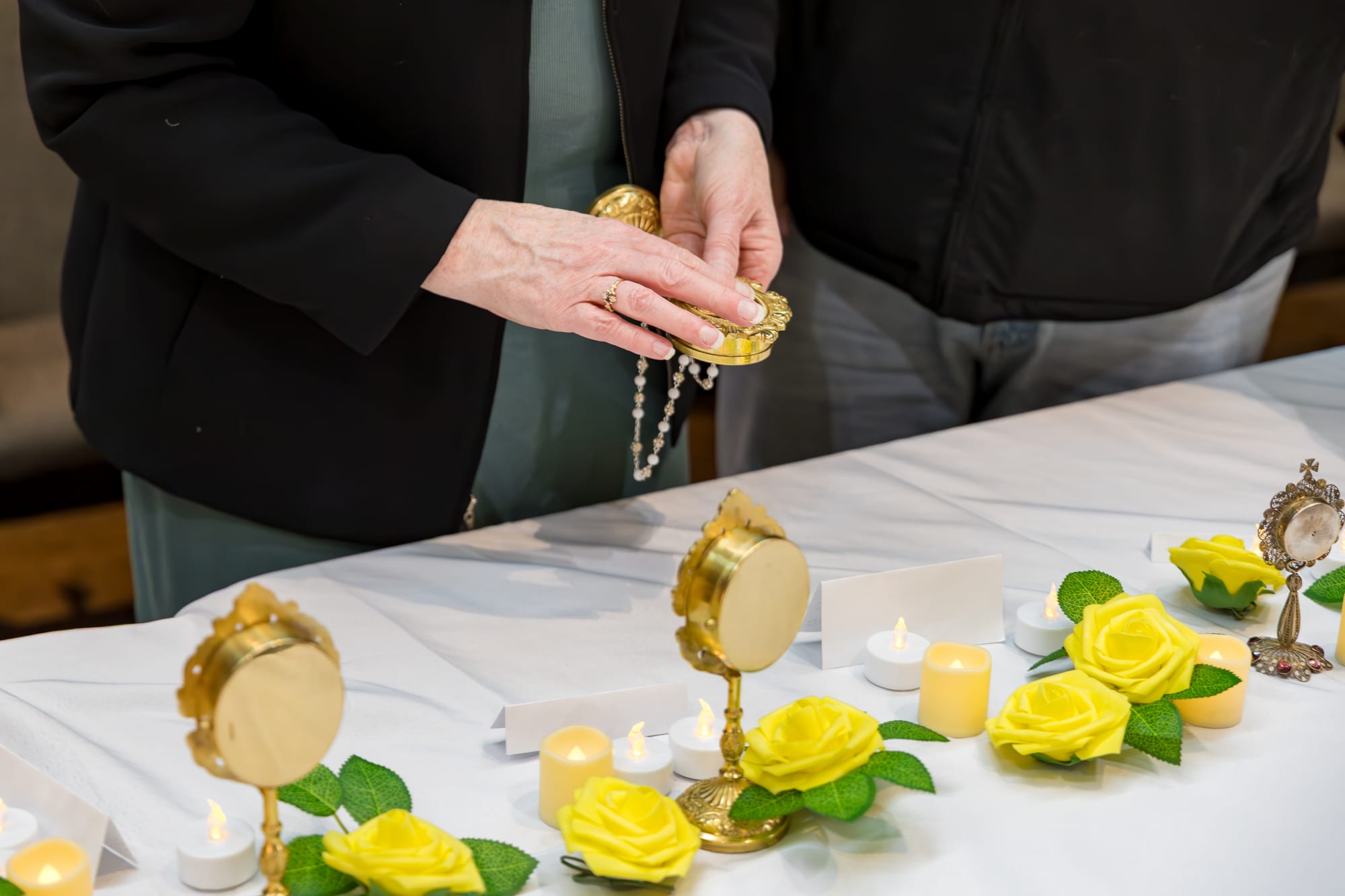
Can I bring a medal or prayer card to touch to a relic?
Often, yes, but ask the custodian or event team first. They will tell you which relics may be approached and how to avoid damaging a sealed case. Touching an item to a relic is a devotional custom, not a way to guarantee a miracle. Please respect any restrictions, especially when a relic is fragile, on loan, or displayed behind glass.
What is a reliquary?
A reliquary is the protective vessel or case that holds a relic. It may be simple or ornate. Its purpose is to preserve the relic, identify it, and allow reverent display when appropriate. Many small relics are secured inside sealed thecae, which should not be opened casually. The beauty of a case is secondary to the dignity of the saint's remains and the prayer it encourages.
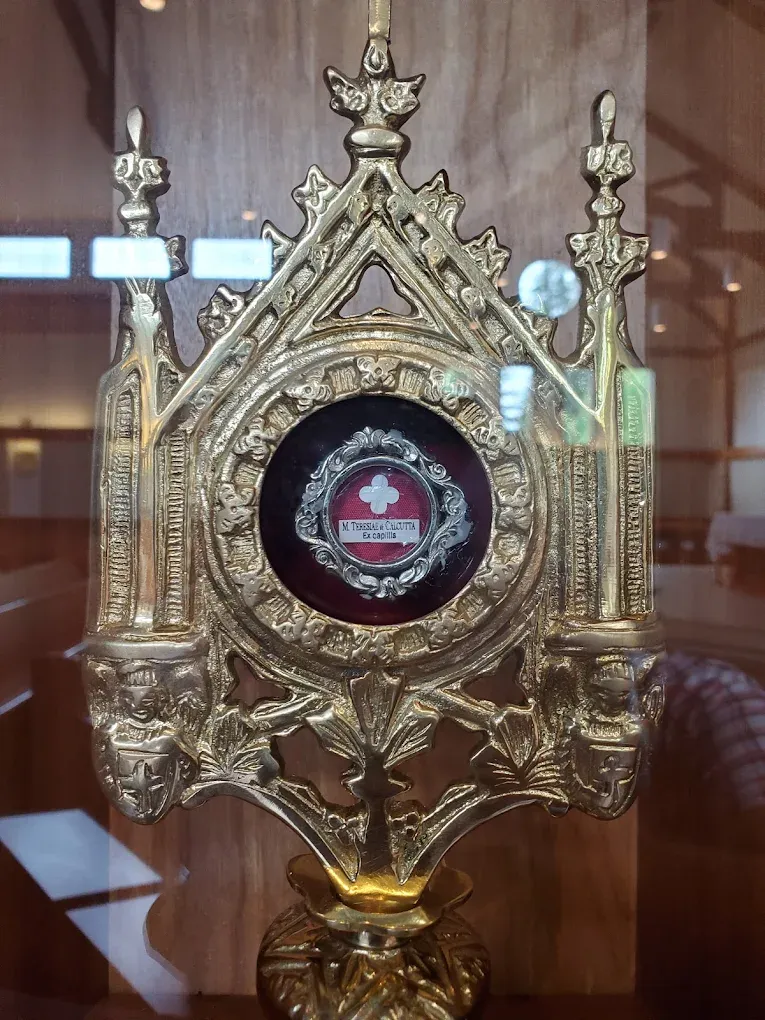
How is a relic authenticated?
For public veneration, the Church calls for proper ecclesiastical documentation of a relic's authenticity. A certificate, identifying label, seals, and a trustworthy chain of custody can help establish its history. For older relics, records may be incomplete; a case or label by itself cannot settle every doubt. Questions should be brought to the responsible church authority.
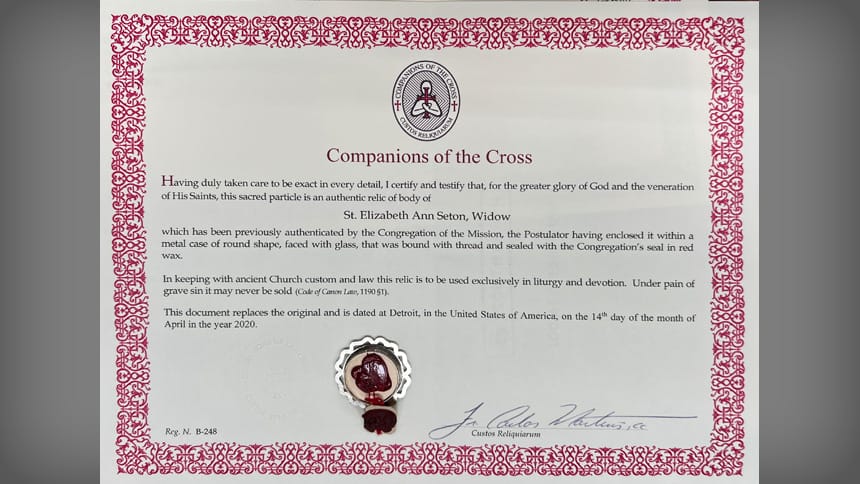
What if a relic has no certificate?
Do not assume it is genuine or false from appearance alone. Preserve the case, label, and any family or parish records; do not break a seal to inspect it. Contact the diocese or a qualified custodian for guidance. The Church requires proper certification for the public display of saints' relics and advises withdrawing doubtful items from public veneration with pastoral care. Email us and we can point you in the proper direction to help get the relic authenticated.
How should I venerate a relic?
Approach quietly, remember the saint's life, and ask for that saint's prayers as you speak to God. You may bow, make the sign of the cross, or briefly touch or kiss the reliquary if the custodian permits it. There is no required gesture or special formula. Keep the line moving when others are waiting, and let the encounter lead you to prayer and a concrete step toward holiness.
We have also produced the world's first prayer for lay people with instructions on how to venerate relics. We offer this as a free pdf for your use. Just email us at contact@therelicproject.org
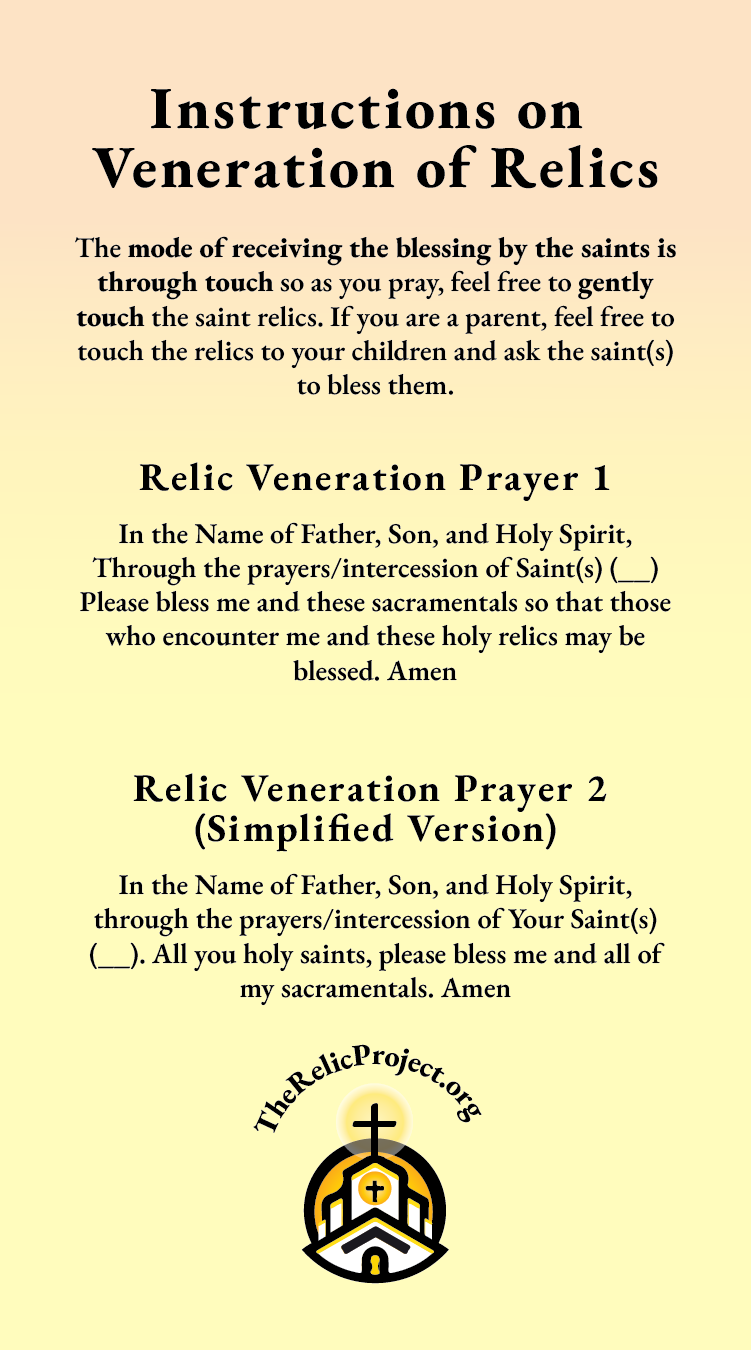
Do I pray to the saint or to the relic?
Never pray to the object. You can pray directly to God and ask a saint to intercede for you, much as you ask a friend to pray. Catholics believe the saints remain alive in Christ and share in the communion of the Church. Their intercession does not compete with Jesus; it depends entirely on Him. A relic helps us remember the person whose prayers we seek.
Can relics work miracles or heal people?
God can grant healing and other graces when people pray in the presence of a relic or ask a saint's intercession. The Bible gives examples of extraordinary works involving physical contact with holy people or their belongings. The relic has no independent power, and no outcome can be promised. If you are ill, seek appropriate medical care as you pray.
How do I obtain a Relic?
We have a guide for requesting relics that is available for clergy or religious communities. If you are a priest or religious, please send us an email to Contact@therelicproject.org to formally request a PDF of this guide.
About the Guide:
This guide provides clergy with a clear process for requesting sacred relics from religious communities, monasteries, and postulators. It outlines the elements commonly required when submitting relic requests and provides sample templates that may be adapted by pastors and clergy when preparing these requests. These guidelines are offered to assist clergy in ensuring that relics entrusted to the Church are preserved, venerated, and safeguarded in accordance with the norms of the Roman Catholic Church. By following these practices, requests may be presented in a manner that reflects the reverence and pastoral responsibility required for the stewardship of the Church’s sacred patrimony. Sample templates and supporting materials are included in the appendices for ease of reference and practical use. This guide is published by The Relic Project as a pastoral resource for clergy.
What is a Reliquarium?
A reliquarium is a public display of relics.
Are relics sacraments?
No. Relic veneration is a form of Catholic devotion, not one of the seven sacraments. It can dispose our hearts to prayer and help us remember the communion of saints, but it does not replace Mass, Confession, or the other sacraments. The Church teaches that popular devotions should support and lead people toward the liturgy, where Christ acts in a unique way.
How is a relic different from the Eucharist?
In the Eucharist, Catholics receive Jesus Christ truly present under the appearances of bread and wine. A relic is a material connection to a saint and is honored as such. These are profoundly different realities: the Eucharist is worshiped as Christ Himself; a saint's relic is venerated. Relic devotion should always direct us toward Christ, especially in the Eucharist.
Why are some relics fragments of bone?
Catholics believe the human body is good, was made for resurrection, and can be an instrument of holiness. Honoring a saint's bodily remains expresses respect for the whole person. It does not authorize careless division of remains: the Church places their recognition, preservation, and any creation of new relics under competent ecclesiastical authority.
Are relics placed in church altars?
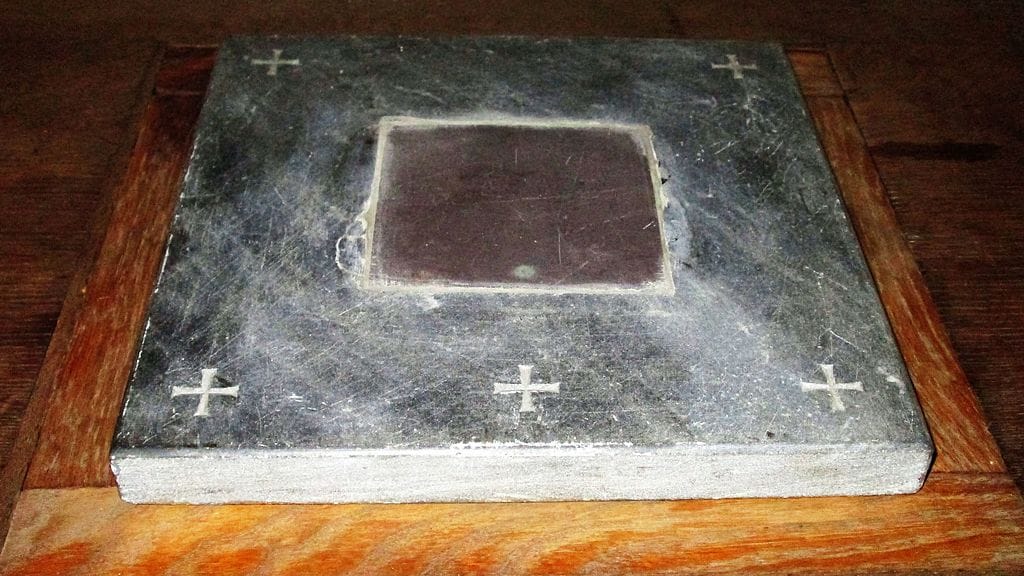
Yes. The Church retains the ancient practice of placing suitable relics of saints beneath an altar at its dedication. This recalls the union of the saints' witness with Christ's sacrifice. Relics should not be set on the altar table used for the Eucharist. The altar and its liturgy remain centered on Christ, not on the relic placed beneath it. Additionally, not all altars have relics. Placing a relic in the altar is a tradition of popular piety and is not canon law.
Can I own or keep a relic at home?
Some Catholics care for relics in their homes, and they should do so prayerfully and securely, with any documentation kept alongside them. Private custody does not grant permission to sell a relic or display an uncertain one for public veneration. If you inherit a relic and do not know its history, contact your diocese or a trusted religious community for guidance. We recommend all privately owned relics be donated to the church so that they can be publicly venerated by the faithful.
Can relics be bought or sold?
No. Canon law absolutely forbids selling sacred relics. The Church also prohibits trading them for money or other goods. A donation to support a visit, educational work, or proper preservation must never be treated as the price of a relic. If you see a relic advertised for sale, do not treat the listing as permission to purchase it.
Can a Venerable person's remains be publicly venerated?
Public veneration is reserved for those the Church has formally recognized as Blessed or Saint. The Church's relic instruction says the remains of a Servant of God or Venerable must not receive the public cult reserved to the beatified and canonized. You may pray privately for their cause, but do not present their remains as an approved relic for public devotion.
Do I have to be Catholic to visit relics?
No. Visitors of any background are welcome at a public relic display or an event open to them. You may simply observe, learn the saint's story, and ask questions; no gesture of veneration is required. We ask everyone to respect the prayerful setting and the instructions of the church or event host. Curiosity can be a good beginning for a conversation about faith.
What is the best way to begin?
Choose a saint whose life speaks to you, read a short biography, and ask God for the grace to imitate that saint's love. Visit a public relic display if one is near you, or invite The Relic Project to your community. The goal is not to accumulate holy objects or unusual experiences. It is to know Jesus more deeply through the lives of those who followed Him.
Sources and further reading
- The Relic Project and Map of Relics
- The Relic Project: How It Works
- Our home visit experience and St. Mary reliquarium update
- Catechism of the Catholic Church, 946–962 and 1667–1676
- Directory on Popular Piety and the Liturgy, 236–237
- Instruction: Relics in the Church—Authenticity and Preservation
- Code of Canon Law, 1186–1190
- 2 Kings 13:21 and Acts 19:11–12
Have another question, or want to bring relics to your community? Email contact@therelicproject.org.