
In Montpellier, relics of saint Roch on special display for Heritage Days

Every third week-end of September, in France, is Heritage Days. A very popular event where people can visit places never open to the public, where there are guides who explain the history of the monuments, special displays and unique openings.
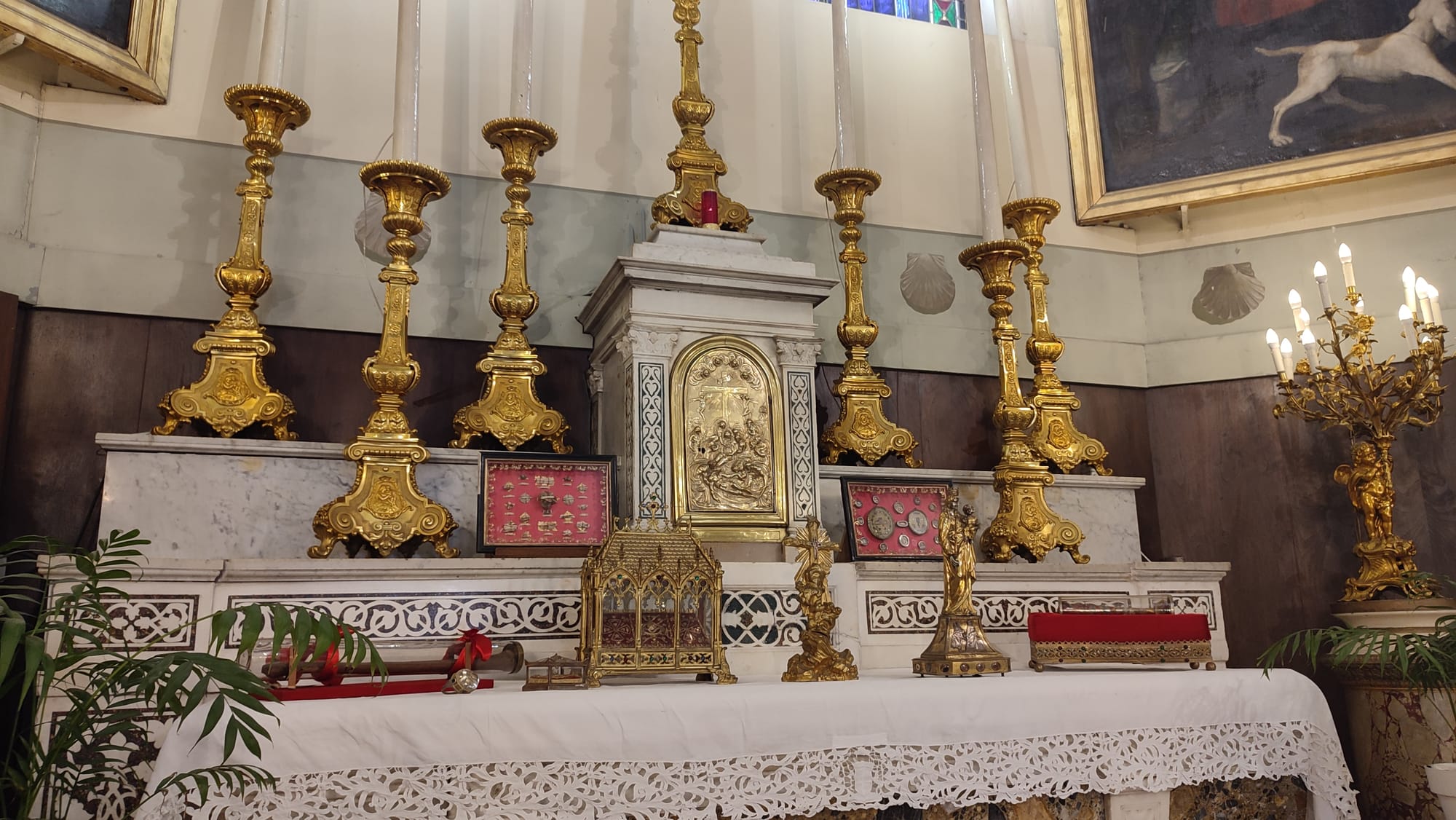
In Saint Roch sanctuary in Montpellier, some relics were shown and the volunteers were explaining what is a relic, their importance for the Church and the cities who have them. There was a time, centuries ago, where the more relics a city had, and especially from a famous saint, the more prestigious it was and attracted a lot of pilgrims, contributing to a prosperous economy.
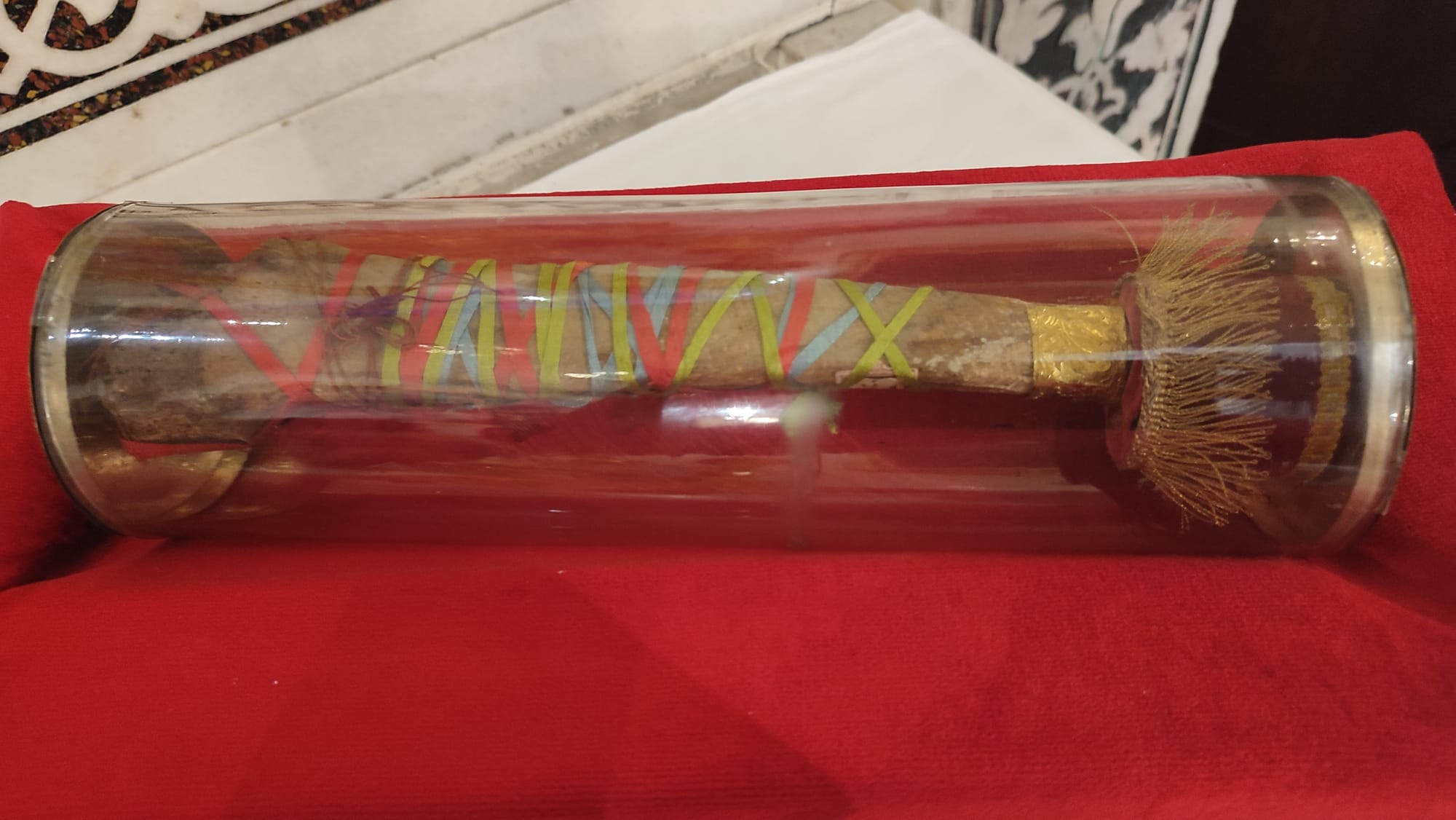
Christian, one of the volunteers, was saying : “We have relics here of 70 different saints, some very old from saints who had known the Apostles. But the most precious is the tibia of Saint Roch, the patron saint of Montpellier. In 1856, Father Recluz, parish priest of Saint Roch, petitioned the church authorities in Venice, where his body was kept, to get a major relic. They were reluctant but he was persuasive ! After all, Saint Roch is born in Montpellier ! The arrival of the relic was met with eight days of festivities. And helped to get funds to build the actual sanctuary”.
The relic was examined by the university of medicine of Montpellier (the oldest in France) and the scientists confirmed that the bone had kept traces of a plague bubo, consistent with the saint's story.
On display there was also another reliquary with pieces of jaw of the saint brought by the trinitarians in the 17th century, the ring of Cardinal De Cabrières, a famous local bishop, where he had a relic engraved and that was kissed by the faithful as was the tradition in these days.We also could see the walking stick of Roch, burned during the French Revolution, partially saved.
Beside Roch remains, there was also a golden cross with a piece of the true Cross, brought in Montpellier by the Guilhem, the ruling lords from the 10th to the 13th century. And three larger reliquaries with a certain number of relics of different saints.
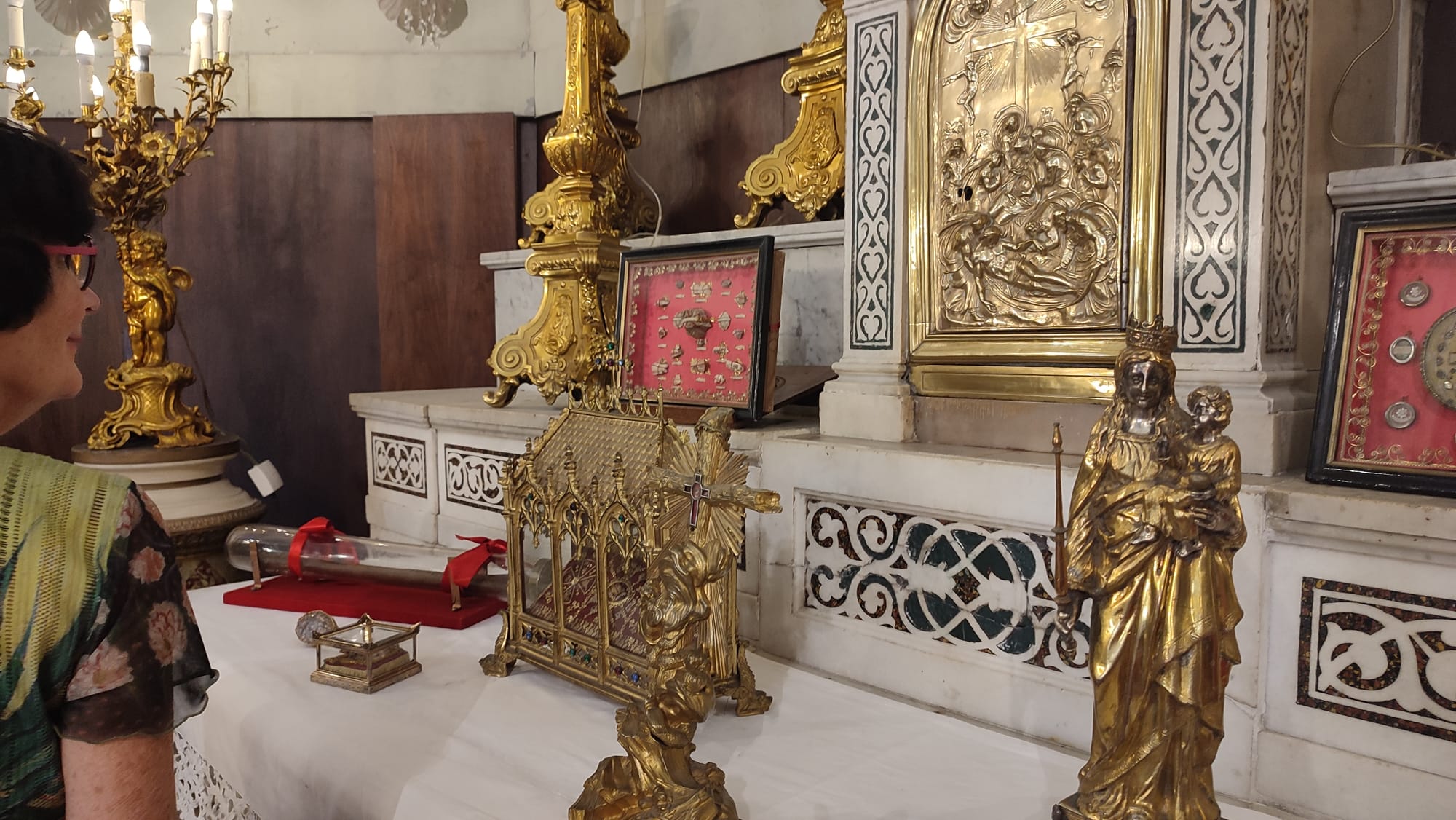
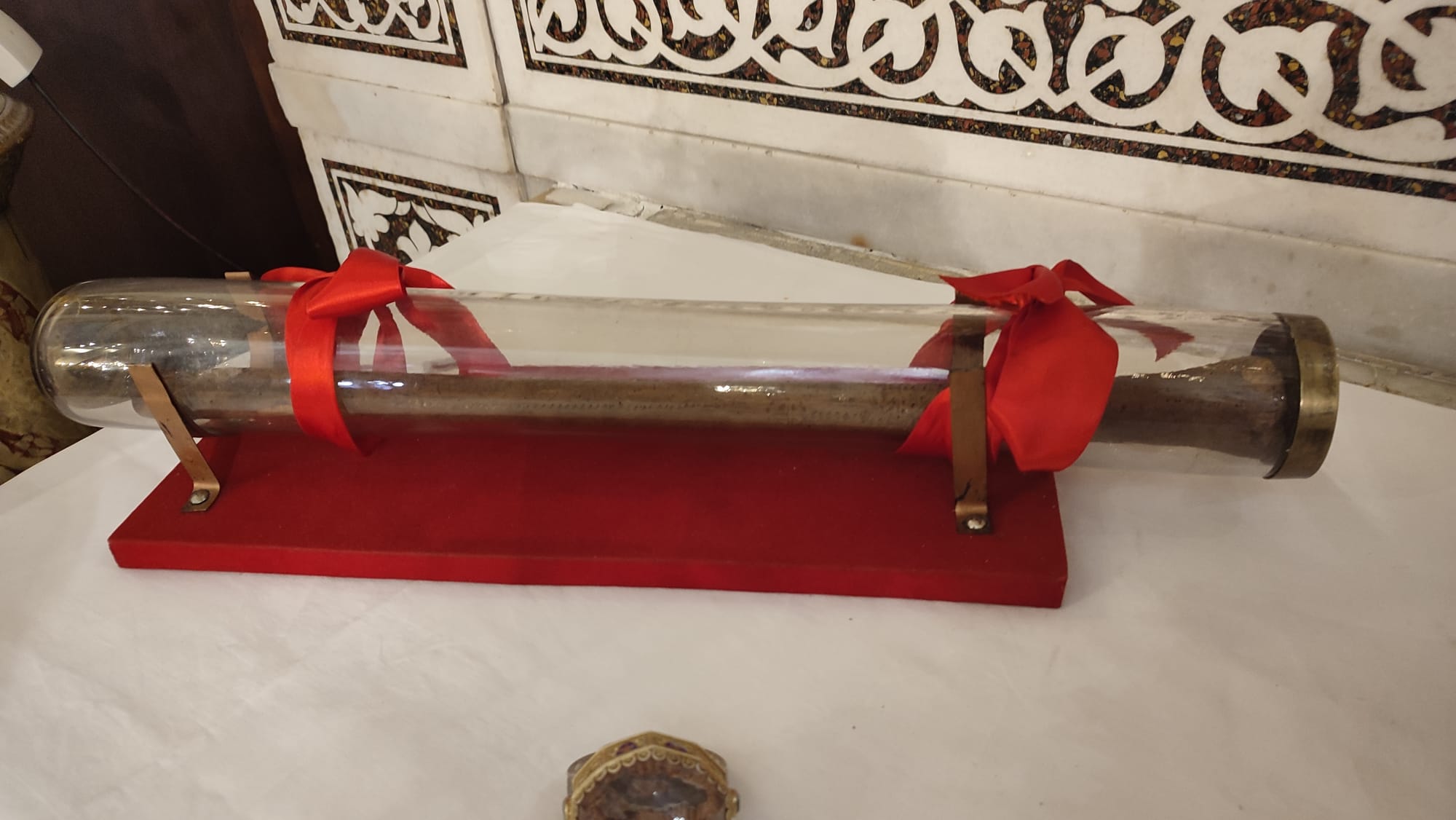
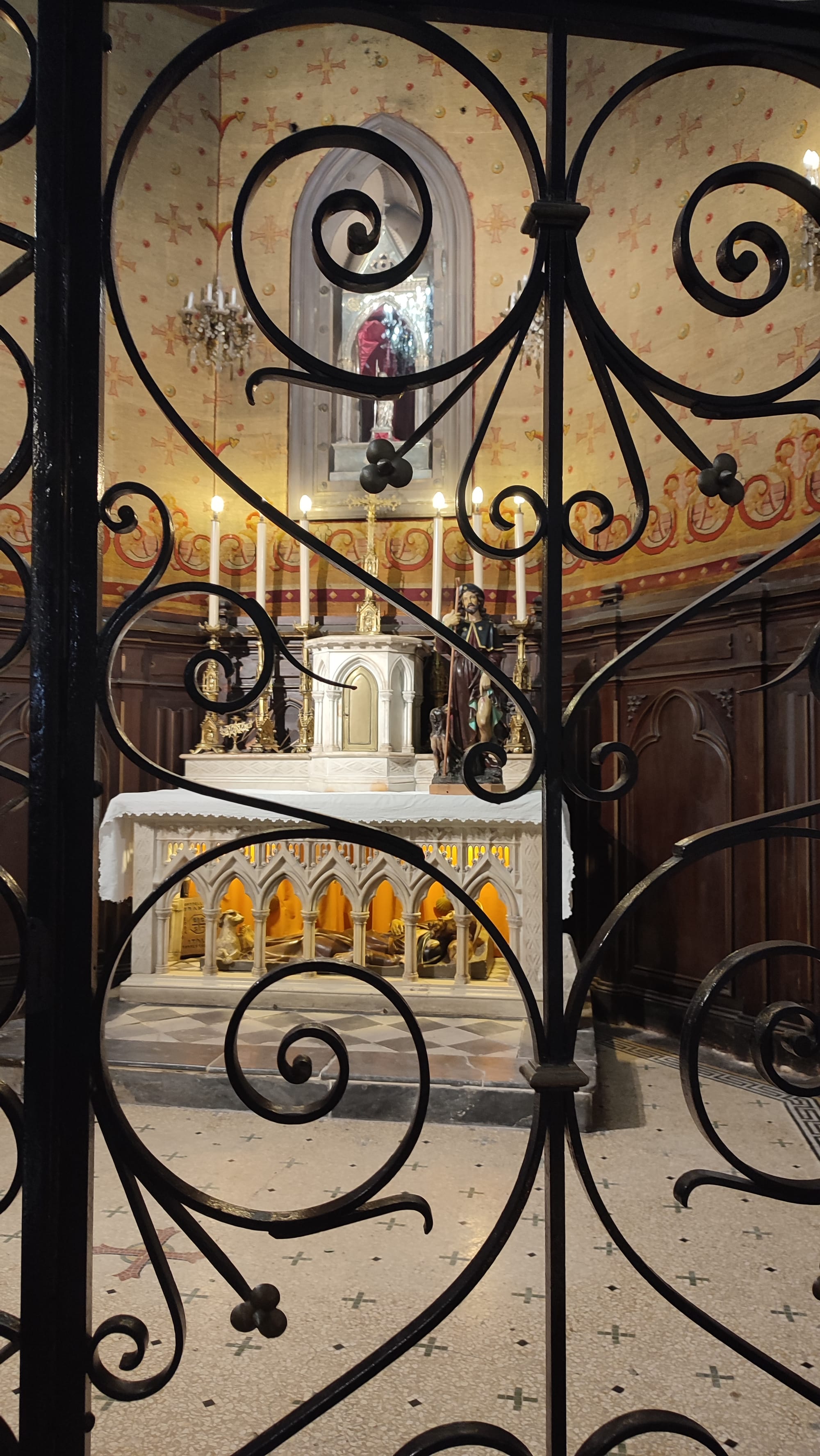
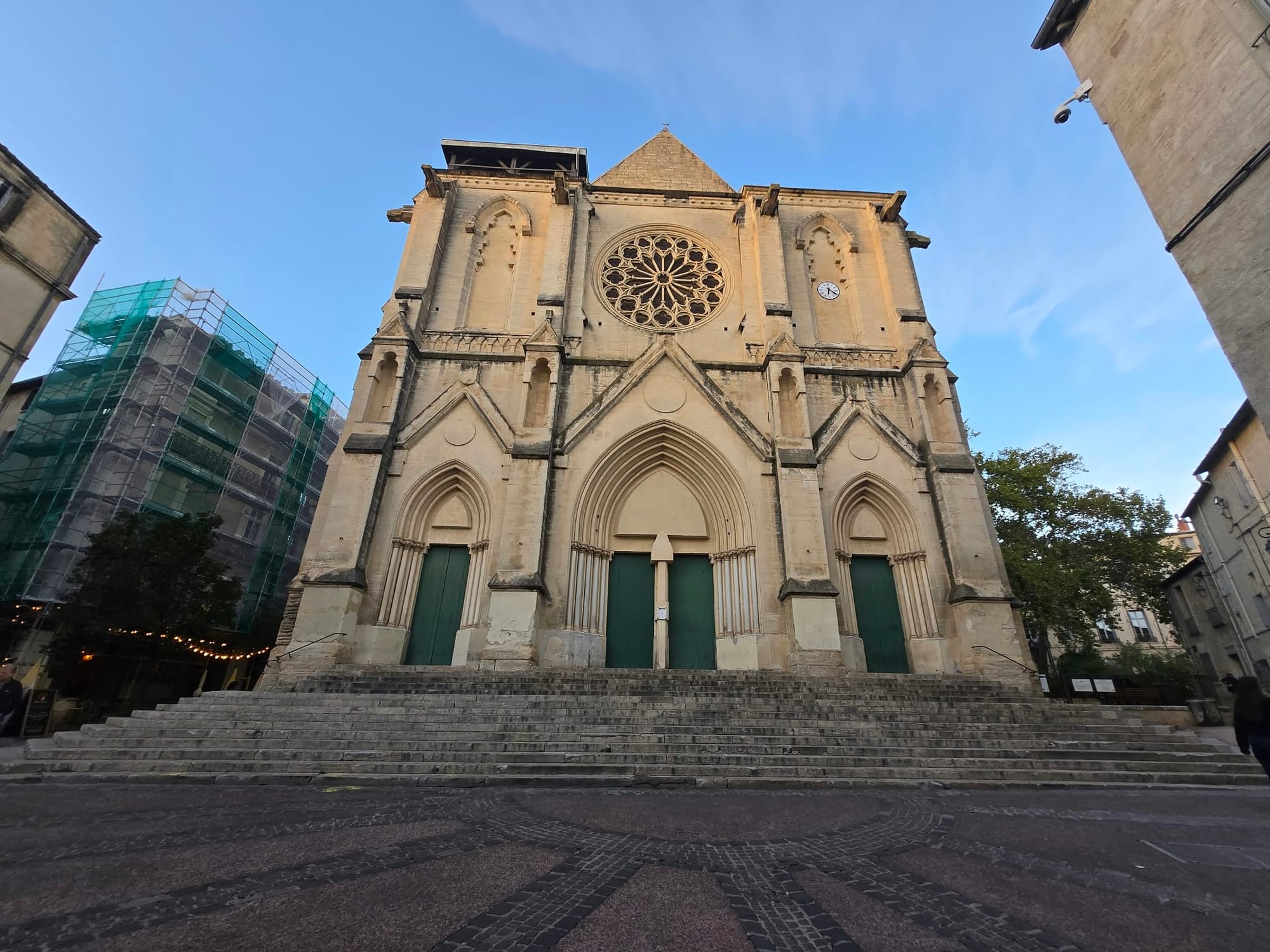
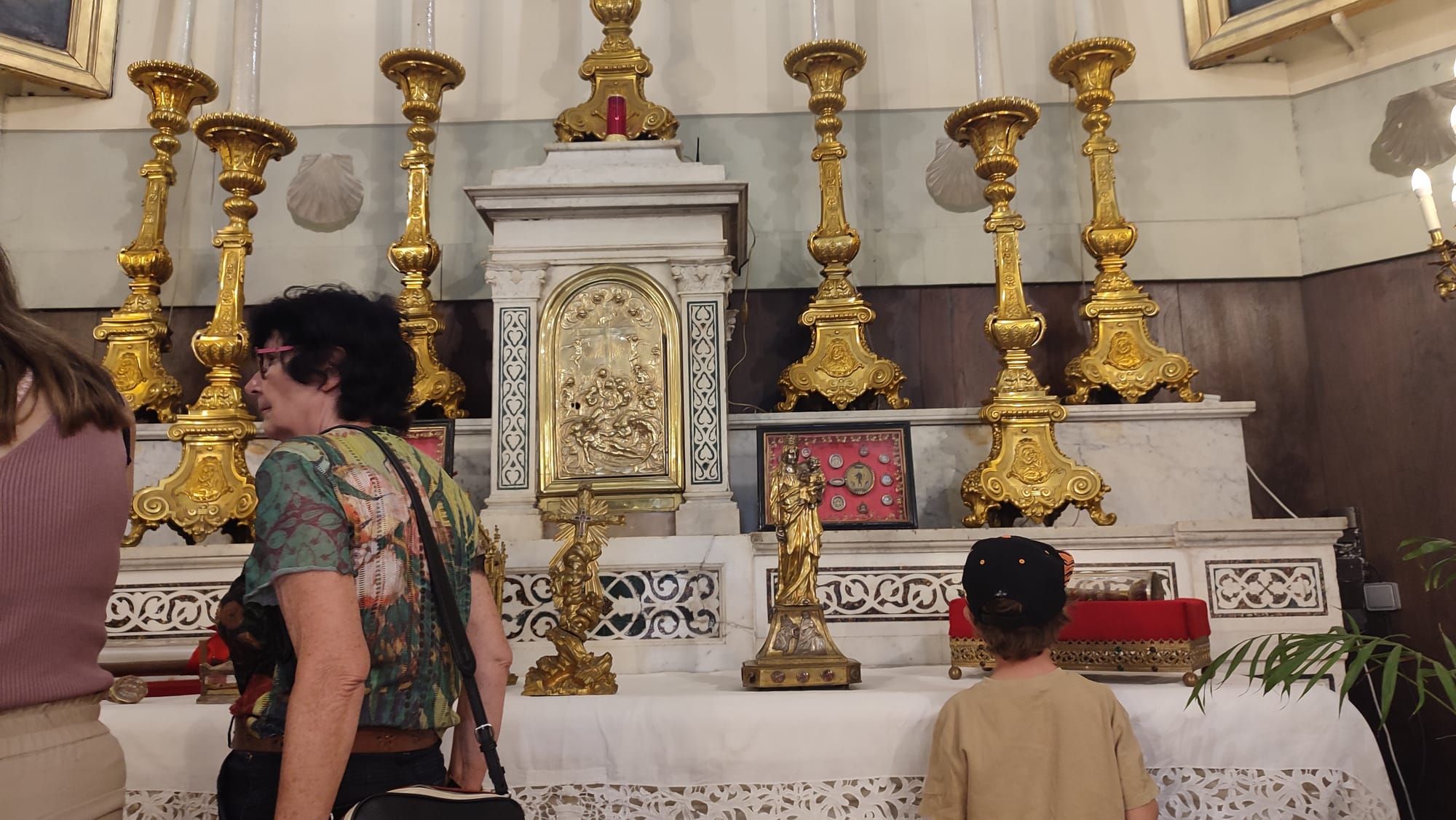
People could see the relics close. The walking stick. The church of saint Roch in the center of Montpellier and the chapel where the pilgrims pray.
This display was exceptional. “Usually this treasure is kept in an armored vault, along with other precious items like chalices or old priest clothes, explained Christian. Too much risk of theft. See, today there are guards at the entrance. All these relics belong to the city of Montpellier”. Since the law of separation of State and Church in 1905, all heritage before this moment is state or cities property. Every four or five years a complete inventory is made.
He went on : “Only the tibia is carried in procession every year on the 16th of August during the annual feasts. There is a relic hidden in the tabernacle above the altar of the chapel dedicated to Saint Roch where people come to pray.” Even if the relic is not shown, statues of Roch remind the pilgrim, on the Camino or locals, that their patron saint is really present and hear their petitions.
Saint Roch history
Roch was born in Montpellier between 1348 and 1350 and studied medicine. He lived through two plague epidemics. Orphan and rich, he gave up his wealth, joined the franciscan 3rd order, became a pilgrim and left for Rome. Along the way, he healed a lot of people from the plague, mixing his medical knowledge and his faith, becoming famous. He caught the disease on his way back home, and went in the woods to die. A dog brought him bread every day and the master of the dog became his disciple.
Roch got better and resumed his journey but was caught in Milanese territory, mistaken for a papal spy and thrown in jail during five years. He never told who he was, faithful to the vows of pilgrims, just said he was a humble servant of God and wanted just to go his way. According to the tradition, he revealed his name only to a priest just before dying the 16th of August 1378. He was buried with devotion in Voghera near Pavie where as soon as 1382 a sanctuary and a feast celebrated his memory.