
Featured Relic: St. Rita of Cascia
Grace Builds on Nature
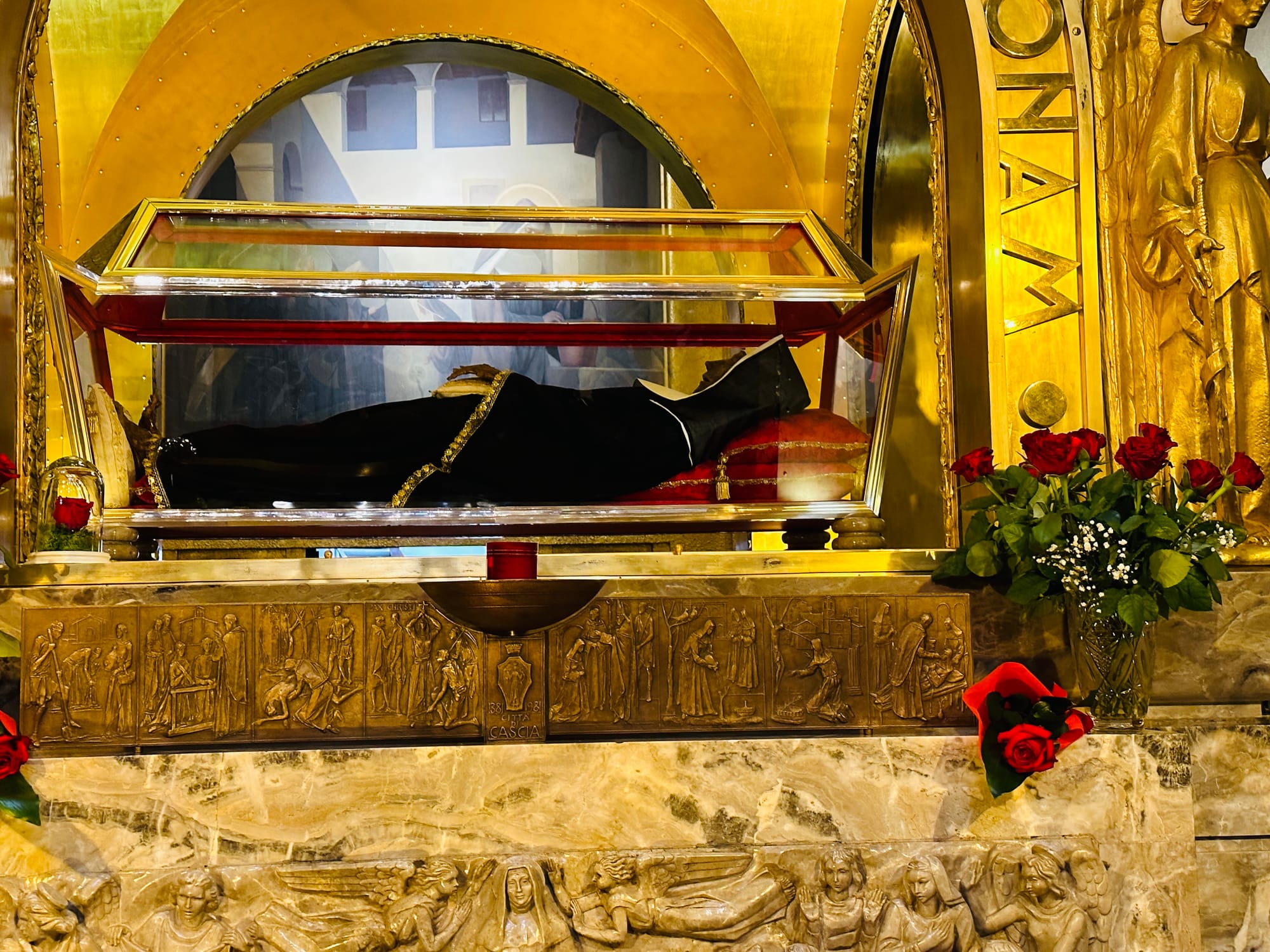
St. Rita of Cascia was born Margherita—“Pearl”—and her life was shaped layer after layer through suffering: a difficult marriage, the murder of her husband, the death of her two sons, rejection by the convent, and the partial stigmata she bore for years. Just as an oyster slowly transforms a painful irritant into a radiant pearl deep in the sea, St. Rita turned every suffering into sanctity through heroic obedience, persistent prayer, and unwavering trust in God. What emerged was a saint of luminous beauty and extraordinary power—the Patroness of Impossible Causes—whose incorrupt body still draws the world to a quiet hill town in Umbria.
Fast Facts
- Birth and Death: 1381–1457
- Canonized: May 24, 1900, by Pope Leo XIII (beatified 1627 by Pope Urban VIII)
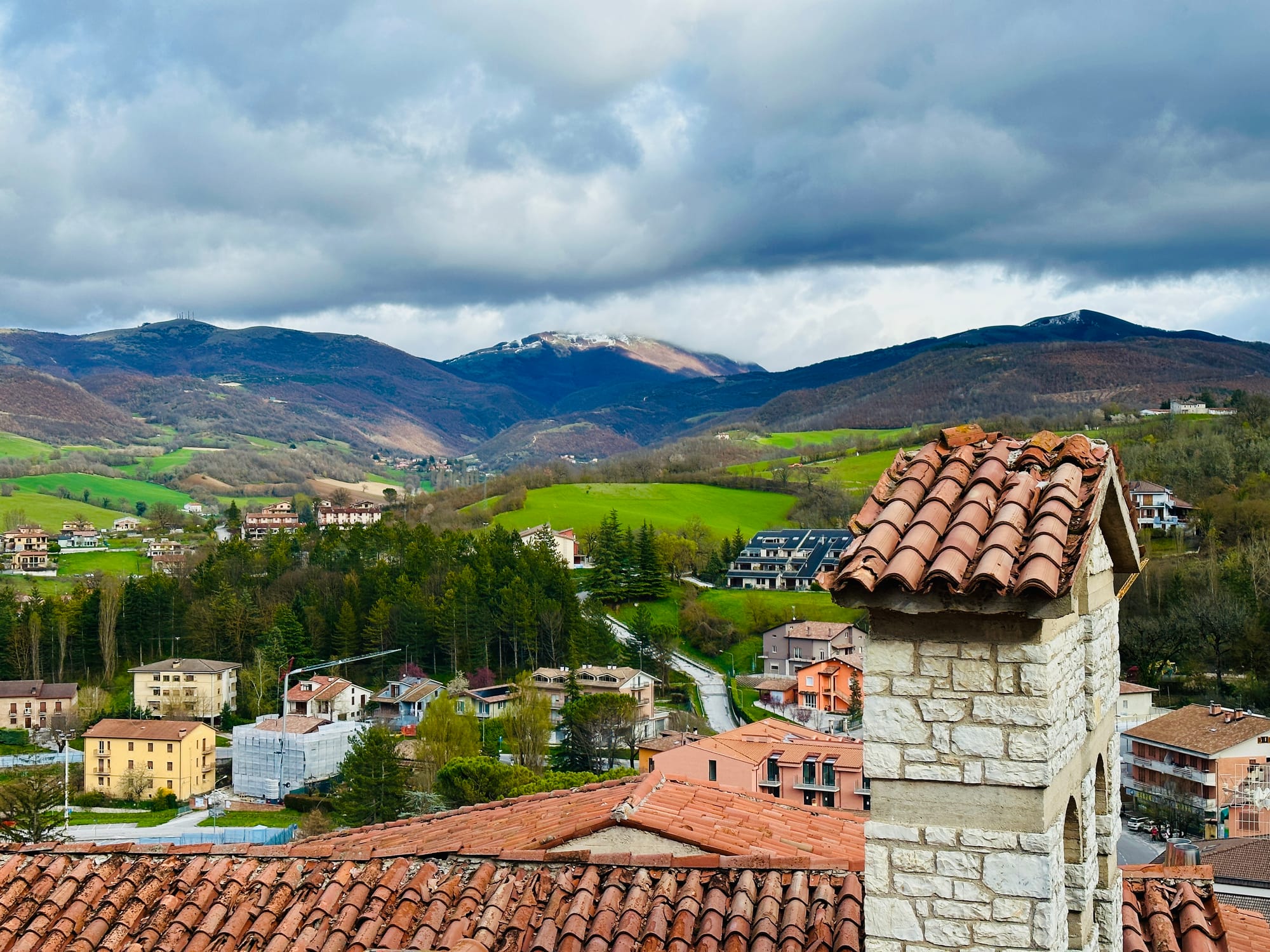
- Major shrine: Basilica of Santa Rita da Cascia, Cascia, Italy
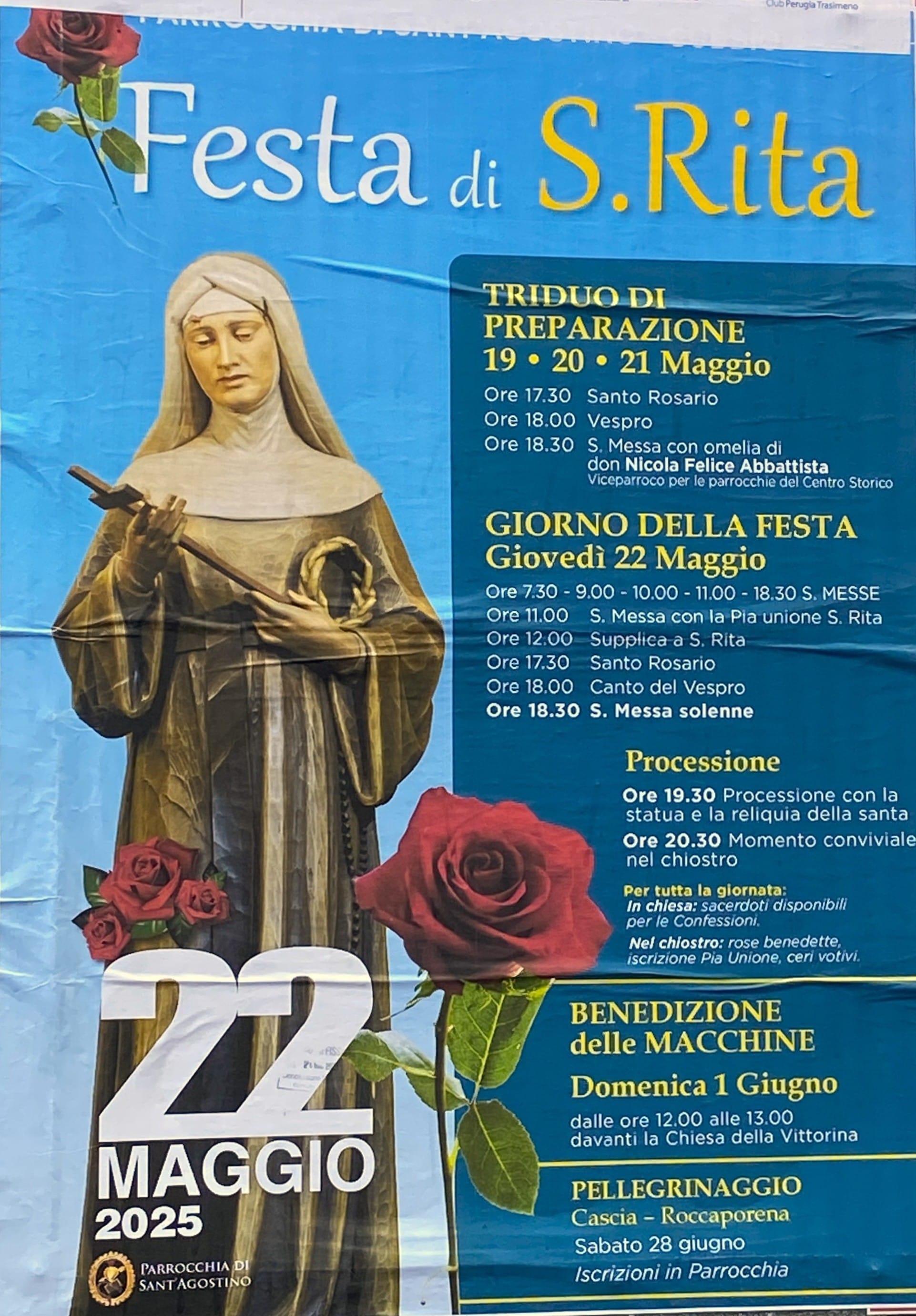
- Feast day: May 22 (Before he was pope, Fr. Robert Prevost, a fellow Augustinian, participated in her feast in Cascia)
- Patroness: Impossible causes, difficult marriages, widows, and parenthood
Who Was St. Rita of Cascia?
Born Margherita Lotti in 1381 in the small village of Roccaporena near Cascia, Italy, to devout parents Antonio and Amata. From childhood, she longed for religious life, but at around age 12 she was married to Paolo Mancini in an arranged union common at the time.
- For 18 years she endured a challenging marriage while raising twin sons, striving to bring peace to her household and modeling Christian virtue.
- Her husband was murdered in a family feud. Her sons were bent on avenging their father, which tormented Rita, but they ended up dying young from illness before they could. She then sought to join the Augustinian convent in Cascia.
- Initially refused entry because she was a widow and because there was still the ongoing family feud, she courageously personally intervened to make peace between the parties, persisting in prayer. The vendetta ended! Rita was admitted to the order and lived as a nun for nearly 40 years.
- Around age 60, while meditating on the Passion before a crucifix, she received a thorn from Christ’s crown in her forehead that remained embedded there and bled until her death. She had prayed to share in His suffering “at least one thorn.”
St. Rita died peacefully on May 22, 1457. At her death, church bells rang spontaneously, and her body was later found to be incorrupt.
Miracles Attributed to Her Intercession
Her life and afterlife are filled with miracles, most famously her body, which remains remarkably preserved and emits a sweet fragrance.
- The Harmless Bees and Healed Hand As a 5-day-old infant, white bees flew in and out of Rita’s mouth without stinging her. As told on the convent’s website: “A peasant, reaping in a field not far away, cuts his hand deeply with a scythe…and goes to seek help. As he passes by little Rita…he makes a gesture to push the (bees) away…(and) he realizes with astonishment he has been healed.”
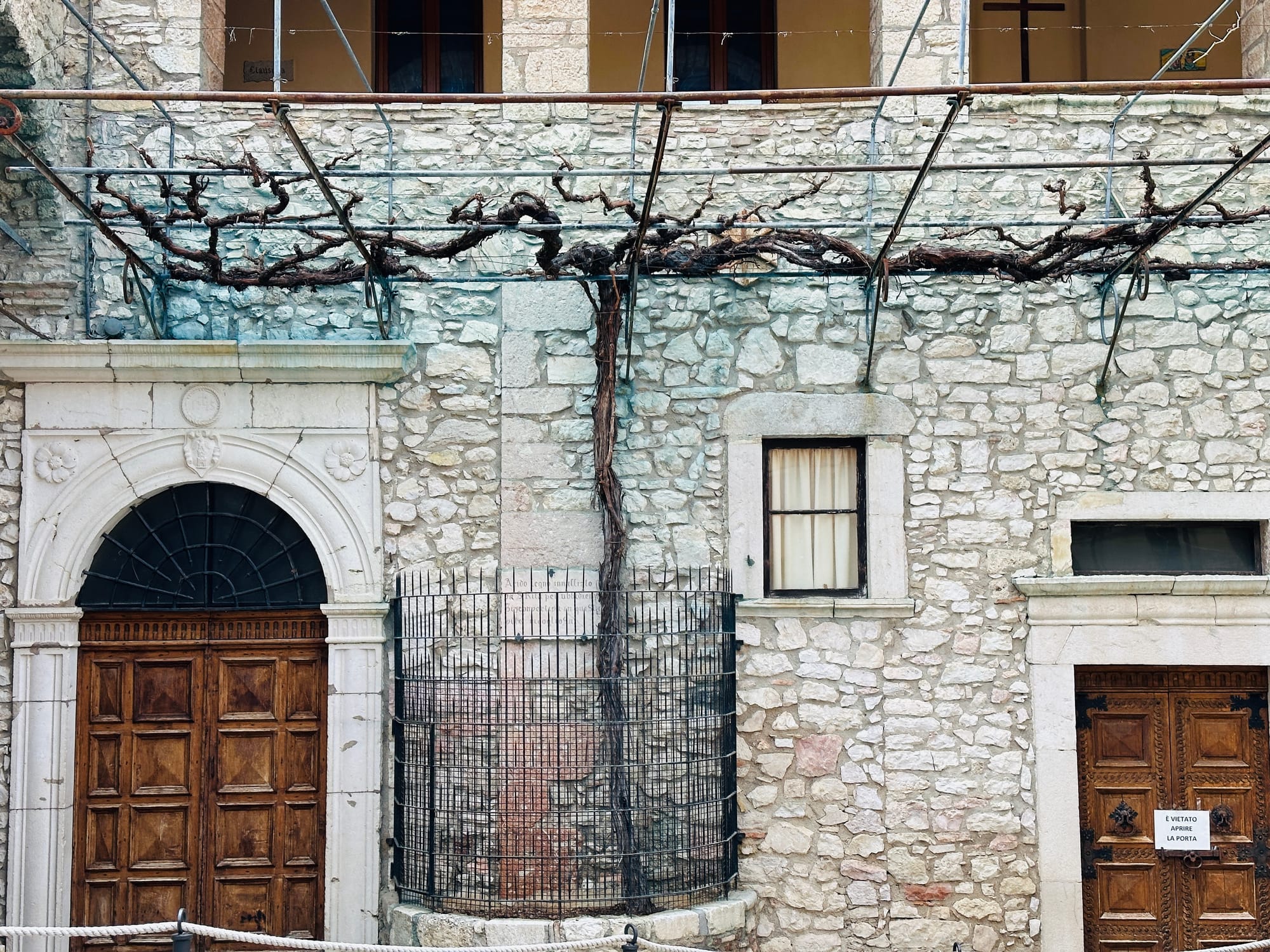
- The Branch Brought to Life Shortly after entering the convent, Rita’s superior tested her obedience by ordering her to plant a withered twig and water it daily. Rita obeyed joyfully. The dead branch took root, grew into a grapevine, and still bears fruit in Cascia today.
- The Winter Roses and Figs On her deathbed, Rita asked her cousin to bring a rose and two figs from her father’s garden--in deep winter. The cousin, though dubious, did what was asked and returned with a blooming rose and two ripe figs.
- The Forehead Wound and other Mystical Graces during her convent life.
- The Earthquake Intercession Her intercession is credited with protecting Cascia from earthquake damage in 1731.
For her canonization in 1900, the Church examined and approved miracles, including two striking healings:
- Elisabetta Bergamini (late 19th century): A young girl facing blindness from smallpox was declared incurable by doctors. Her parents brought her to the convent in Cascia and dressed her in a votive habit like St. Rita’s. After four months of fervent prayer, Elisabetta suddenly cried out that she could see. Her sight was completely restored.
- Cosimo Pellegrini (1887): A 70-year-old man suffering from severe long-standing gastroenteritis and painful hemorrhoids lay near death after receiving the Last Sacraments. In a vision, St. Rita appeared to him. He immediately regained strength, appetite, and full health, and soon worked with the vigor of a much younger man.
Countless favors continue today, especially for impossible causes — healed illnesses, reconciled families, and desperate situations.
Signs and Symbols of the Saint
- Depicted with a bleeding thorn wound on her forehead.
- Often shown holding or surrounded by roses from that miracle.
- Sometimes portrayed with the bees that swarmed her in infancy; seen as a sign of her future holiness.
- Augustinian habit, crucifix, or a skull as a reminder of contemplation and mortality.
Profound Procession
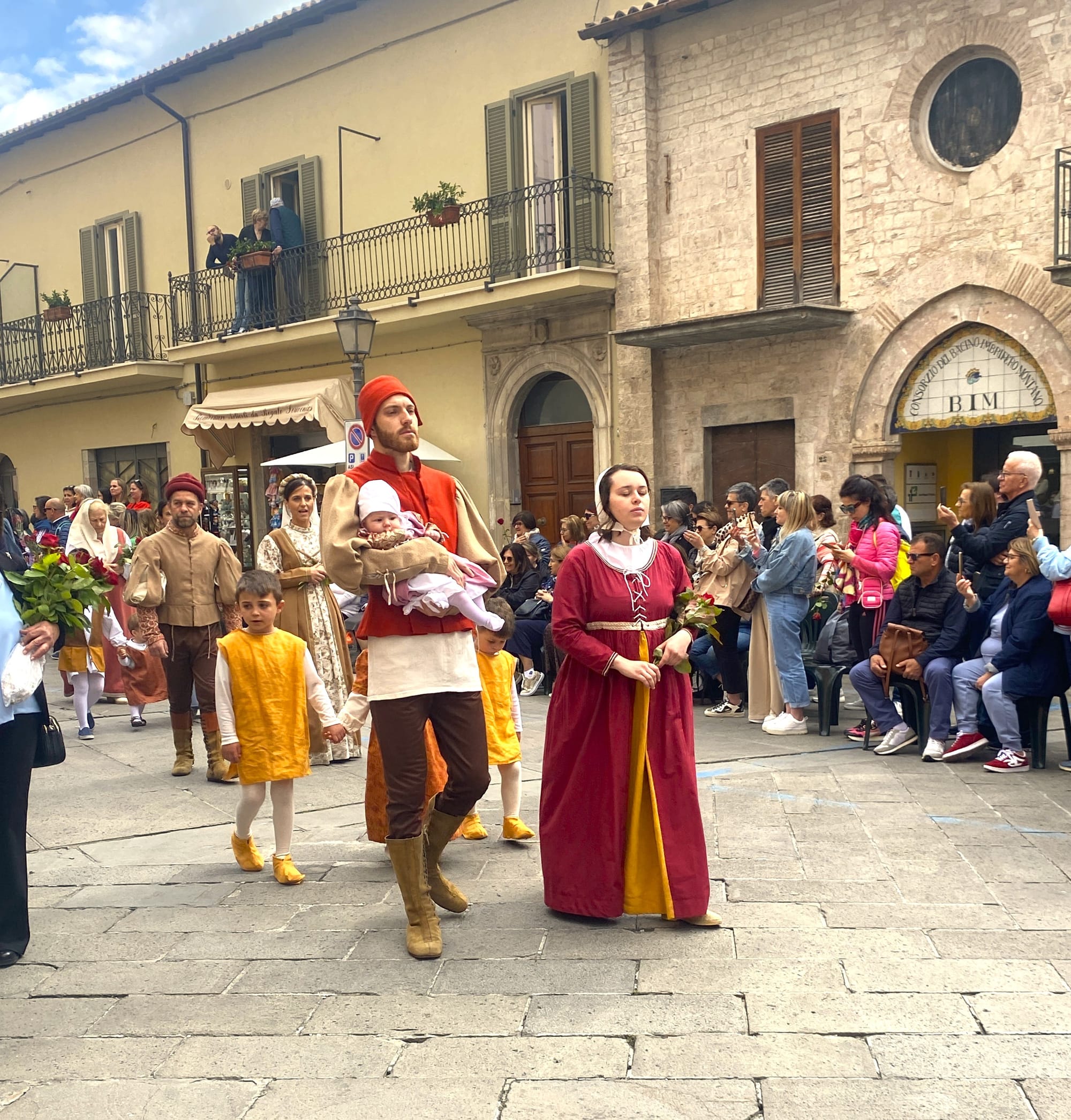
Every May 22, hundreds of locals process solemnly in authentic 15th-century costumes from St. Rita’s hometown to Cascia. There are whole families with bonneted babes in arms, opulently-outfitted elders, and fancy frocked youth. The winding path echoes with sacred hymns and ringing bells, while the air carries the rich scent of incense and fresh roses. Flower vendors abound. Thousands of visitors line the streets. The day culminates with a Pontifical Mass in the Basilica, followed by the annual blessing of all those red roses. They have been carrying on this tradition for centuries to honor the unlikely saint who triumphed through obedience, persistence, trust, and prayer.
Relating to Her Today: Thorns and Roses
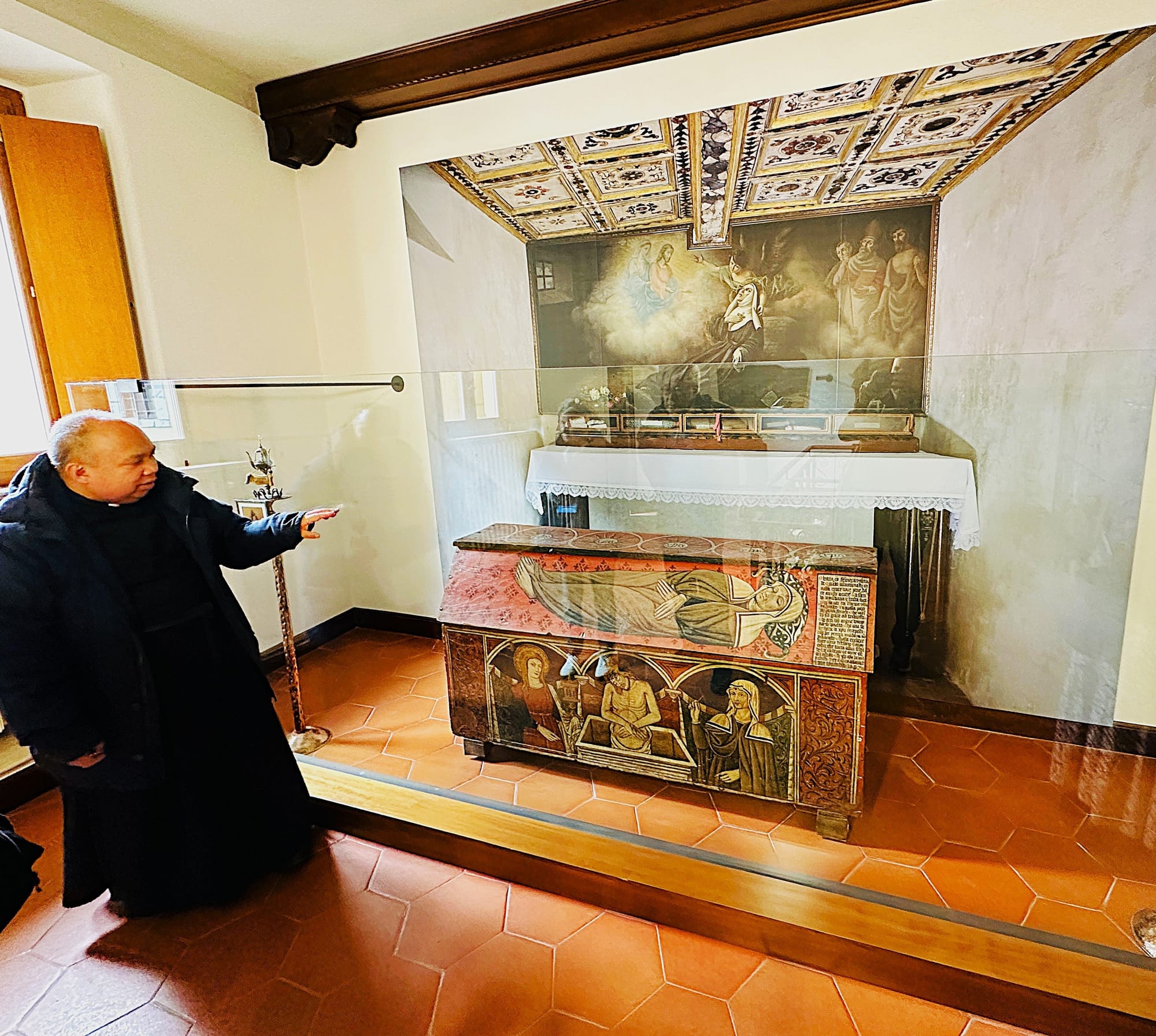
From this celebrated procession to the quiet veneration of her incorrupt body resting in a glass-enclosed reliquary, St. Rita draws nearly one million pilgrims every year to her remote hilltop shrine. In the Basilica’s sanctuary, the peace is palpable as pilgrims pray before her. Her beloved novena is a powerful source of hope.
More than five hundred years after her death, this magnificent peacemaker is alive in the hearts of the faithful. She speaks with special tenderness to those facing seemingly impossible situations—troubled marriages, family strife, serious illness, or deep despair. Through her example as the patient pearl, St. Rita gently teaches us how to carry our own thorns, knowing that roses can still bloom even in the dead of winter.
St. Rita of Cascia, pray for us!