Relics Making News: Pope Venerates Relics of St. Augustine and Mother Cabrini
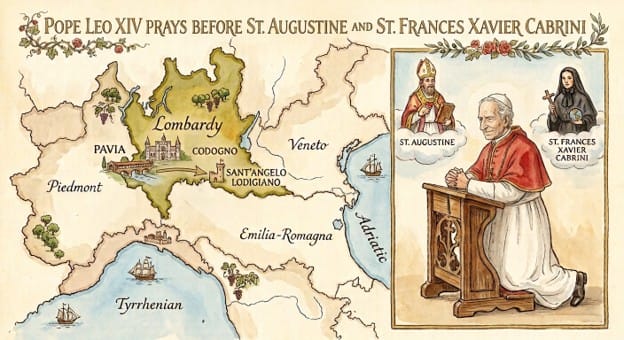
Pope Leo XIV visited Pavia and Sant’Angelo Lodigiano in the Italian region of Lombardy on June 20, 2026, to venerate the relics of St. Augustine of Hippo and St. Frances Xavier Cabrini, respectively. Veneration (honoring) is fully Biblical (2 Kings 13:21 and Acts 19:12) and traditional, while worship is reserved for God alone. These acts of piety were personal as St. Augustine is the spiritual father of the pope’s priestly order, and St. Cabrini is a great American/Italian saint. They were also pastoral as they were a public witness to the world.
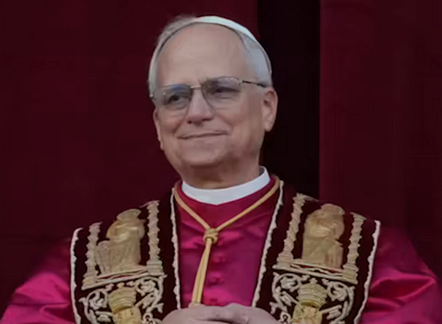
Pope Leo XIV. Image credit: Creative Commons.

All About Augustine
First, the Pope traveled to Pavia where he met with the Augustinian community of which he was the Prior General (leader) for a dozen years. After that, he prayed at the tomb of St. Augustine at Basilica di San Pietro in Ciel d’Oro. He also incensed the relics in their glass reliquary and then led a short prayer and spoke to the Augustinians, bishops, clergy, and faithful who were there. This write-up tells more on the Pavia portion of the visit. The “son of Augustine” said it was like a homecoming for him.
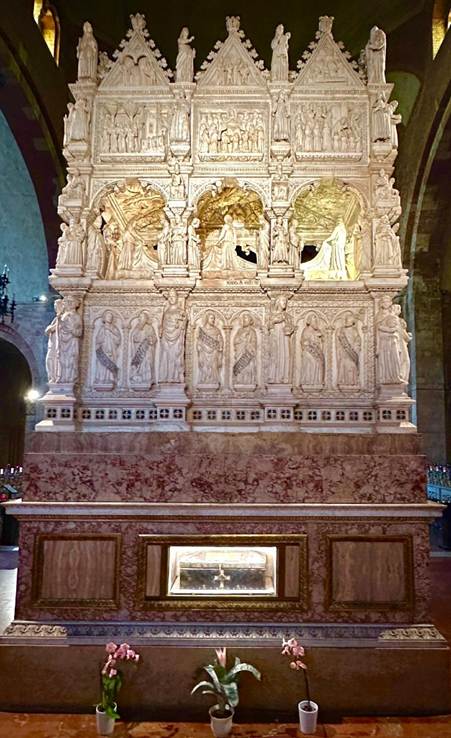
The “Arca di Sant’Agostino” (sarcophagus/tomb with his relics) has been ensconced in the Basilica for 700 years. Image credit: Laura Ruberto for The Relic Project.
For St. Augustine’s relics as well, Pavia is home after a journey. Following his death in 430 during the Vandal siege of Hippo Regius (modern-day Algeria), the saint’s remains were moved to Cagliari, Sardinia, for safekeeping. In the early 8th century, amid Saracen raids on the island, the relics were redeemed and transferred to Pavia by the Lombard King Liutprand. They were solemnly placed in the Basilica, where they have rested for over 1,300 years. This historic translation not only protected the mortal remains but also made the city a lasting center of Augustinian devotion.
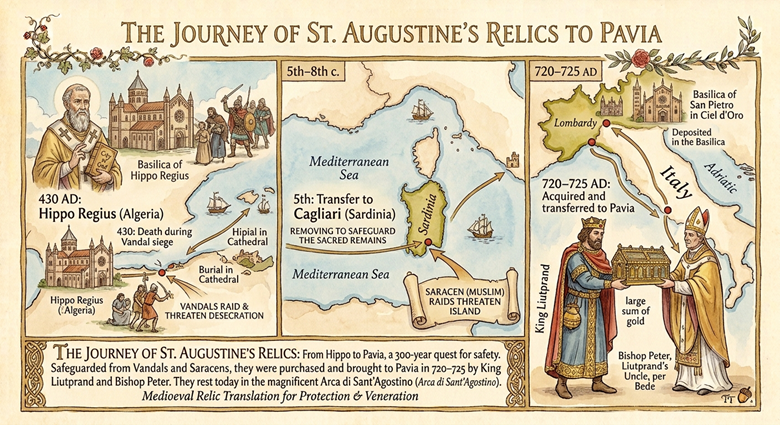
The “Arc of St. Augustine” travels through time and space for safekeeping. Image credit: Graphic generated by Gemini AI.
Here are some facts about this extraordinary holy man.
St. Augustine of Hippo
- Birth and death: November 13, 354 - August 28, 430
- Feast day: August 28
- Country of origin: Roman North Africa (born in Tagaste, in what is now Algeria/Souk Ahras, then part of the Roman Empire).
- Country of service: Primarily North Africa (especially Hippo Regius, modern Annaba, Algeria), where he served as priest and bishop. He also spent time in Italy (Rome and Milan) during his conversion.
- Known for: Living a famously wild youth (including fathering a son out of wedlock) before his dramatic conversion at age 31 in a Milan garden. Son of St. Monica who prayed for him constantly. One of the greatest Doctors of the Church and Church Fathers; theologian, philosopher, and bishop. Key works include Confessions (spiritual autobiography) and City of God (defense of Christianity). He profoundly shaped Western Christian thought on grace (called the Doctor of Grace), original sin, the Trinity, sacraments, and the relationship between faith and reason. His Rule inspired many religious orders, including the Augustinians.
- Virtues exhibited: Humility (openly confessed his sins and youthful failings in Confessions), charity (emphasized love of God and neighbor as the heart of Christian life), perseverance (overcame years of spiritual wandering and heresy before his dramatic conversion), wisdom (harmonized faith and reason in profound theological works), hope (trusted in God’s mercy despite personal struggles), and deep interior faith (model of conversion and reliance on grace)
- You might not know: St. Ambrose baptized him. St. Augustine wrote over five million words. He experienced a profound mystical vision of God alongside his mother St. Monica at Ostia just before her death.
- Patron of: Brewers, theologians, printers, and those with sore eyes. He is also invoked against religious doubt and is a model for converts and those struggling with chastity.
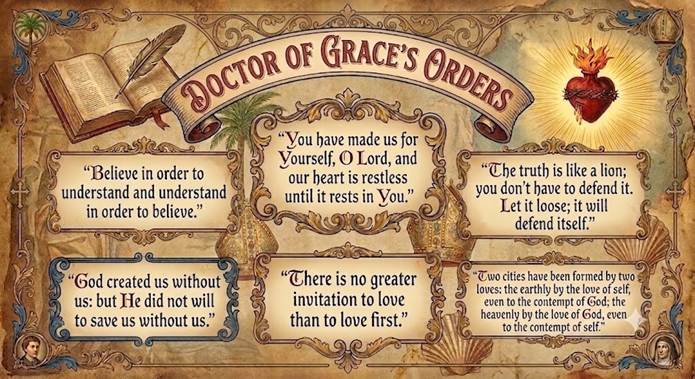
Famous quotes from St. Augustine. Image credit: Graphic generated by Gemini AI.
A Mother’s Heart
Next, the Holy Father visited the Basilica of Sts. Anthony Abbot and Frances Cabrini in Mother Cabrini’s birthplace of Sant’Angelo Lodigiano. He participated in Eucharistic Adoration and then venerated and incensed the saint’s actual heart. This exquisite relic was brought over from nearby Codogno by the Missionary Sisters of the Sacred Heart of Jesus from its home in their convent chapel at the Chiesa del Monte Tabor. The sisters’ website tells about the two towns and of course all about Mother Cabrini. The Relic Project, too, has facts about this faith-filled first U.S. citizen to be canonized in our recent “Relics Making News” post on American saints (she’s first under the section “The More You Know—Great American Saint Facts”).
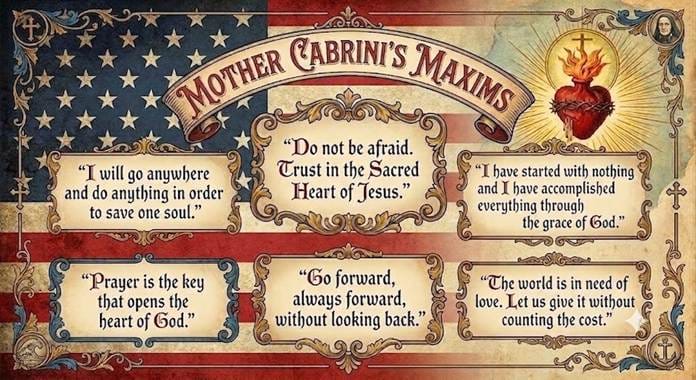
Some of Mother Cabrini’s wisdom. Image credit: Graphic generated by Gemini AI.
To end his day, Pope Leo spoke to the 5,000 faithful that were present at the Basilica and later led Vespers. This article has more on the story.
We would do well to follow the Pontiff’s example in venerating relics.
As you are probably not heading to Italy (but maybe someday!), why not find some relics in your own backyard this summer?
The Relic Project database is searchable by person and by place, and we are constantly adding more saints and sites. Honoring these holy men and women, our saint friends, is always worth the trip.
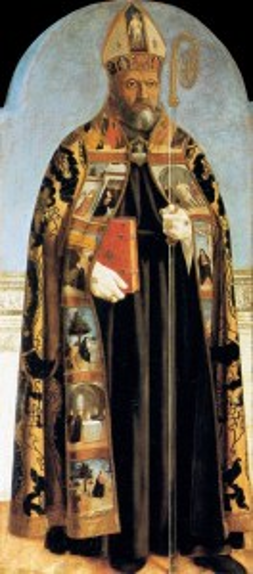
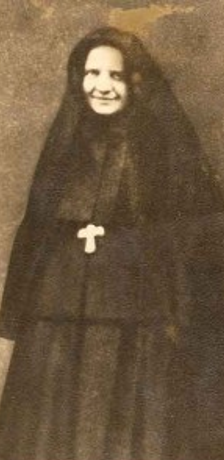
Sts. Augustine and Cabrini. Image credits: Creative Commons (both).


St. Augustine and St. Frances Xavier Cabrini, pray for us and protect the Holy Father!
SOURCES
St. Augustine
- Biography & General Info: https://www.newadvent.org/cathen/02084a.htm
- Quotes & Writings (primary sources): https://www.newadvent.org/fathers/ (search Augustine)
- Symbols & Iconography: https://www.augustinianorder.org/ (official Augustinian site)
St. Frances Xavier Cabrini
- Biography: https://www.ewtn.com/catholicism/saints/frances-xavier-cabrini-548
- Quotes & Spirituality: https://cabrini.org/ (official site has letters and writings)
- Symbols & Relics: https://www.cabrinishrine.org/ (National Shrine with photos of heart relic and iconography)
- Relic info. http://www.saintsinrome.com/2013/08/st-frances-xavier-cabrini.html
Pope Leo XIV Visits
- Full Official Schedule: https://www.vatican.va/content/leo-xiv/en/travels/2026/documents/pavia-santangelo-lodigiano-20giugno2026.html
- Pavia (St. Augustine): https://www.vaticannews.va/en/pope/news/2026-06/pope-leo-pastoral-visit-pavia-st-augustine-interiority-church.html
- Sant’Angelo Lodigiano (St. Cabrini): https://www.vaticannews.va/en/pope/news/2026-06/pope-leo-sant-angelo-lodigiano-visit-cabrini-migrants-witness.html
- OSV News Coverage (both visits): https://www.osvnews.com/pope-leo-prays-at-st-augustines-tomb-in-pavia-calling-all-to-be-signs-of-jesus-love/ and https://www.osvnews.com/pope-leo-xiv-venerates-heart-of-mother-cabrini-calls-for-more-missionaries-like-her/
- Aleteia article https://aleteia.org/2026/06/20/pope-leo-spends-time-in-prayer-with-st-augustines-relics/